
Kent, WA
Garage Door Service for Kent's 1960s-2000s Housing Stock
Garage door service for Kent homes built mostly between 1962 and 2005, matched to the cold, wet Pacific Northwest climate this hardware has to survive every winter.
What we do
Garage door work in Kent
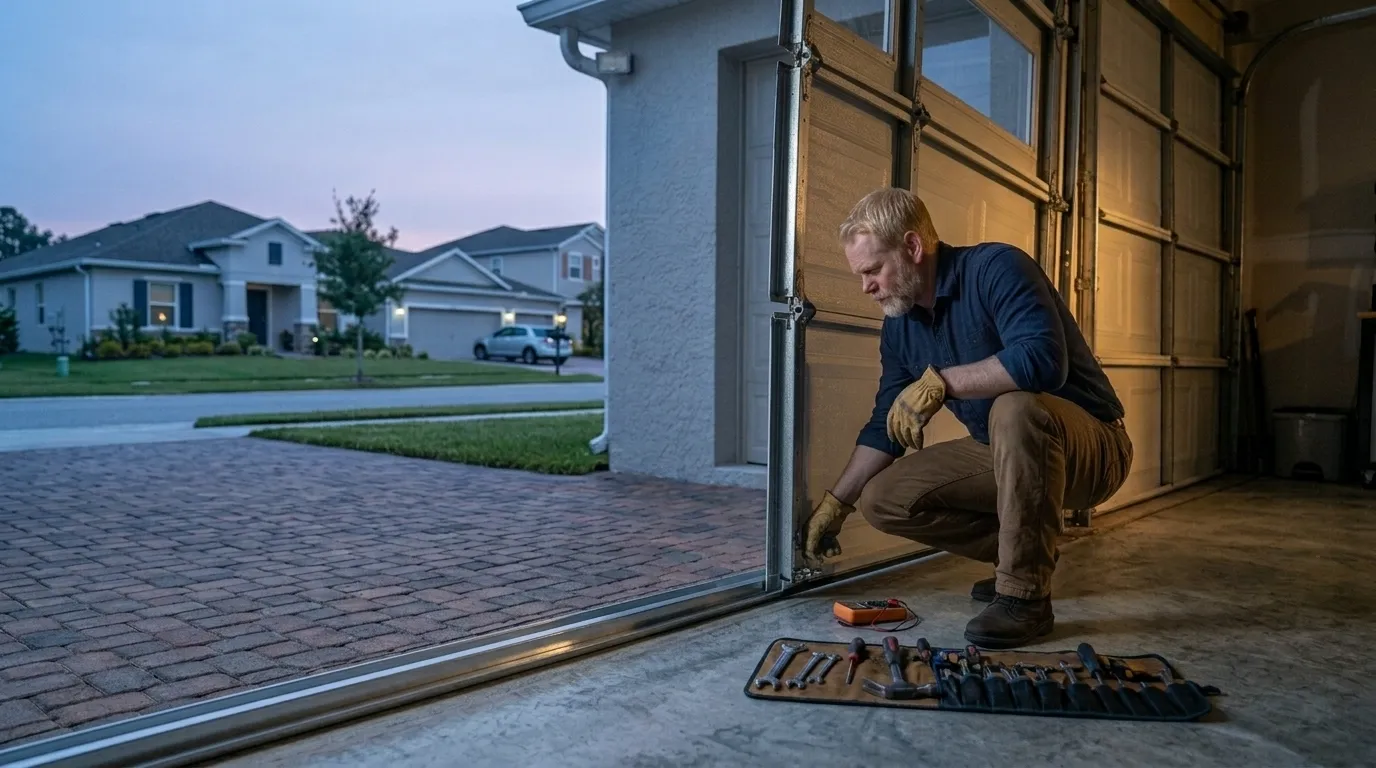
Garage Door Repair for Kent's 1980s Housing Stock
Kent Garage Door Co repairs springs, openers, and tracks on the 1980s-era steel doors common across Kent and the surrounding service area. Learn more →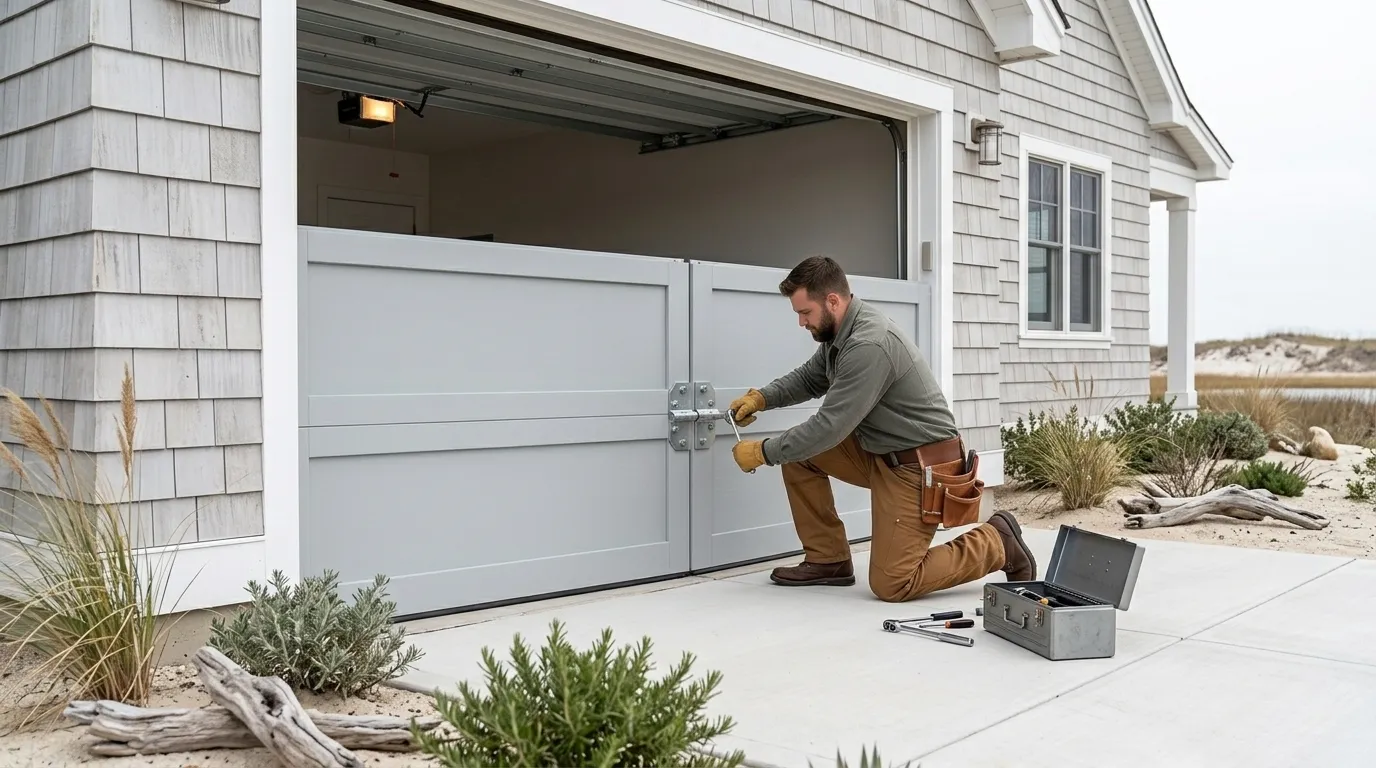
Garage Door Installation Built for Kent's Housing Stock
Installing new garage doors on Kent's 1962-2005 housing stock, matched to torsion hardware and insulation that hold up through a cold, wet Puget Sound winter. Learn more →Local detail
How It Shows Up
Most calls we get start the same way: the door hesitates halfway up, or it reverses right after the rollers hit the bend in the track. In a lot of Kent houses, that's not a mystery fault - it's an opener and spring set that's been doing its job since the house was built, sometime between 1962 and 2005, with the bulk of that stock going up in the 1980s and 90s. Original hardware from that era wasn't built for a 40-year service life, and it shows in small ways before it shows in big ones: a grinding noise on the way down, a door that catches at the same spot every time, a remote that works from the driveway but not from the street.
None of that is normal wear you should just live with. It's usually the first sign that a spring is losing tension or a track has shifted out of plumb, and both get worse, not better, the longer they run.

The area
What Causes It Around Here
Kent sits in a cold-moderate climate band, and that matters more for garage doors than people expect. It's not extreme cold that wrecks hardware here - it's the repeated cycle of damp, chill mornings and mild afternoons that swells wood jambs, pits unprotected steel track, and stiffens lubricant on springs and bearings until they're working harder than the label says they should.
Add in a lot of houses from the 1962-2005 window that never had their springs or cables swapped even once, and you've got hardware running 20 to 40 years past when it should have been serviced. Homes across the service area's 43 named neighborhoods share this same profile - same building era, same weather load - so the failure patterns repeat block to block rather than being a one-house problem.
What we find
What Can Go Wrong
Left alone, a stiff torsion spring doesn't just get noisier - it eventually snaps, usually when the door is halfway open, which is the worst possible moment for a 150-pound door to lose its counterbalance. A track that's crept out of alignment can let a roller jump the rail entirely, and on the older extension-spring setups still common in Kent's mid-century sections, a frayed cable under load is a real safety hazard, not just an inconvenience.
Openers from the pre-2000s stock often lack the auto-reverse sensitivity that's standard now, so a door that used to just squeak can become one that closes on something in its path without stopping. None of this needs a dramatic event to reach that point - it's the same slow mechanical fatigue, and by the time you hear it, the parts are already most of the way to failing.
How we work
What the Fix Involves
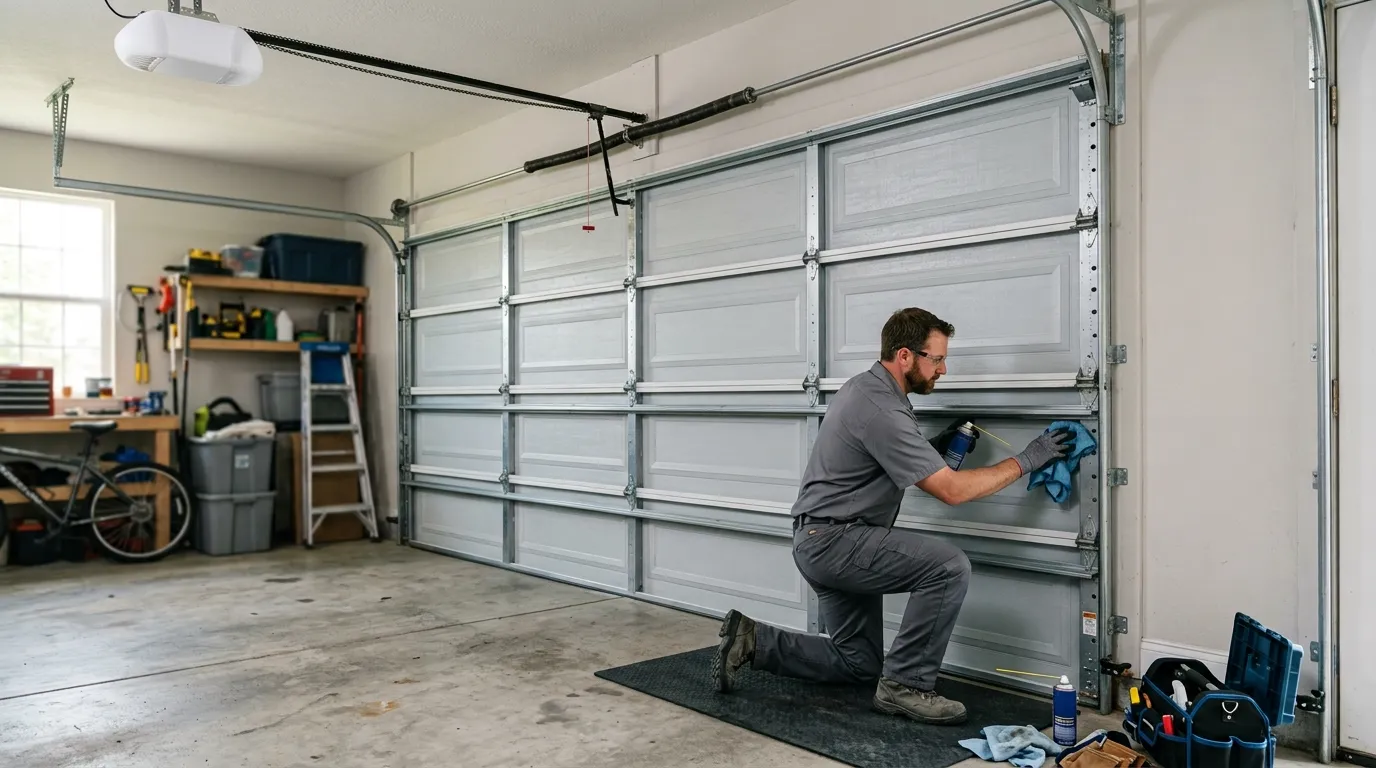
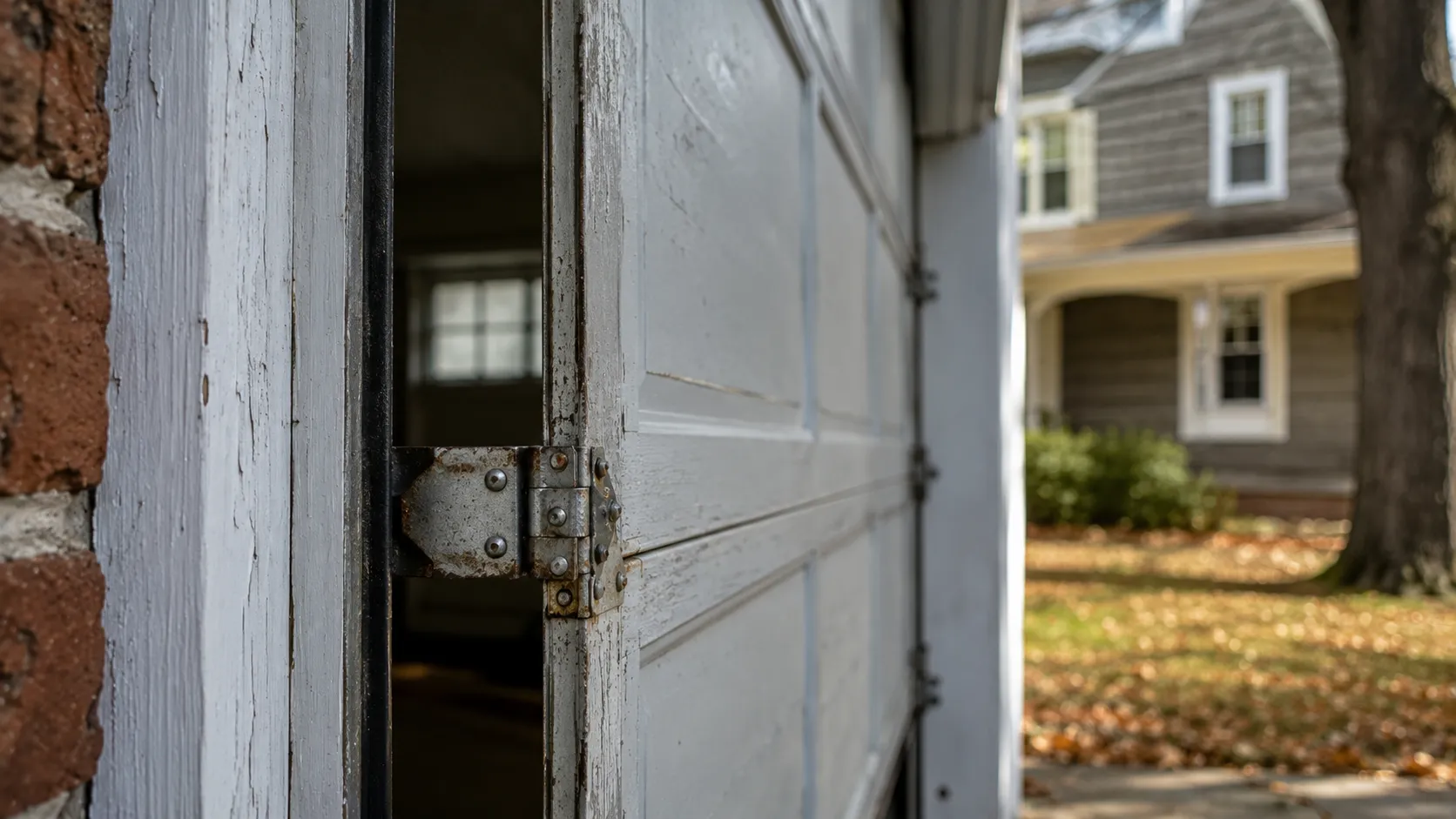
Service starts with the spring and cable system, since that's what's carrying the door's full weight and what fails hardest when it goes. We check torsion or extension spring tension against the door's actual weight, inspect cables and rollers for fraying or wear consistent with 20-plus years of use, and true up the track if the door's been walking off center.
On homes still running original 1980s-90s openers, we look at whether the safety reversal system meets a level worth keeping in service versus recommending an upgrade - we'll tell you straight if a repair isn't worth it on hardware that old rather than patch something that's going to fail again in six months. One honest limit: if a part's been discontinued by the original manufacturer, which happens on doors from this era, we source the closest compatible match rather than promising an exact factory replacement.
Questions
Common questions
Why does my garage door only act up in the morning?
Cold, damp mornings stiffen lubricant on springs and rollers and can tighten a wood jamb enough to bind the door's path. As the day warms up, things loosen and the door seems fine again. It's a sign the hardware is working harder than it should, not something to ignore because it clears up by afternoon.
Is my door's spring original to the house?
If your home was built between 1962 and 2005 and the spring has never been replaced, it's very likely original or close to it. Springs are rated for a set number of cycles, and most in that housing stock are well past their expected service life by now.
Do all Kent-area homes have the same garage door setup?
No, but the neighborhoods in this service area share a housing era, mostly 1980s-90s construction, so the same failure patterns turn up repeatedly: aging torsion springs, tracks bent from freeze-thaw cycling, and openers without modern safety reversal.
Ready when you are
Need a garage door sorted in Kent?
Kent Garage Door Co repairs and installs garage doors, springs and openers in Kent, WA and the surrounding area.