
Guide
Old Doors, No Insulation: What Kent Homeowners Are Dealing With
Kent homes built 1962-2005 often carry doors with zero insulation. Kent Garage Door Co explains what to check, what drives cost, and what cold-moderate winters do to them.
Local detail
What It Costs
We don't have a flat number to give you here, and we'd rather say that than make one up. What we can tell you is what drives the cost either way. If your door is original to a house built in the 1962-2005 window that covers most of Kent, the panel itself is almost certainly uninsulated steel or a single layer of aluminum - there was no code pushing builders to do otherwise back then. Retrofitting insulation into an old panel isn't really a thing we do; foam kits from a hardware store don't seal the gaps at the edges where the heat actually leaves, and the labor to strip and refit an old panel usually costs more than it's worth.
For most owners the real choice is between living with the door as-is or replacing it with an insulated one. Weatherstripping and bottom seals are the cheaper middle step, and worth doing regardless of what you decide on the panel itself. We'll look at your specific door and tell you honestly which side of that line you're on - we're not going to talk you into a full replacement if a seal job solves your actual problem.</p
The area
What to Check
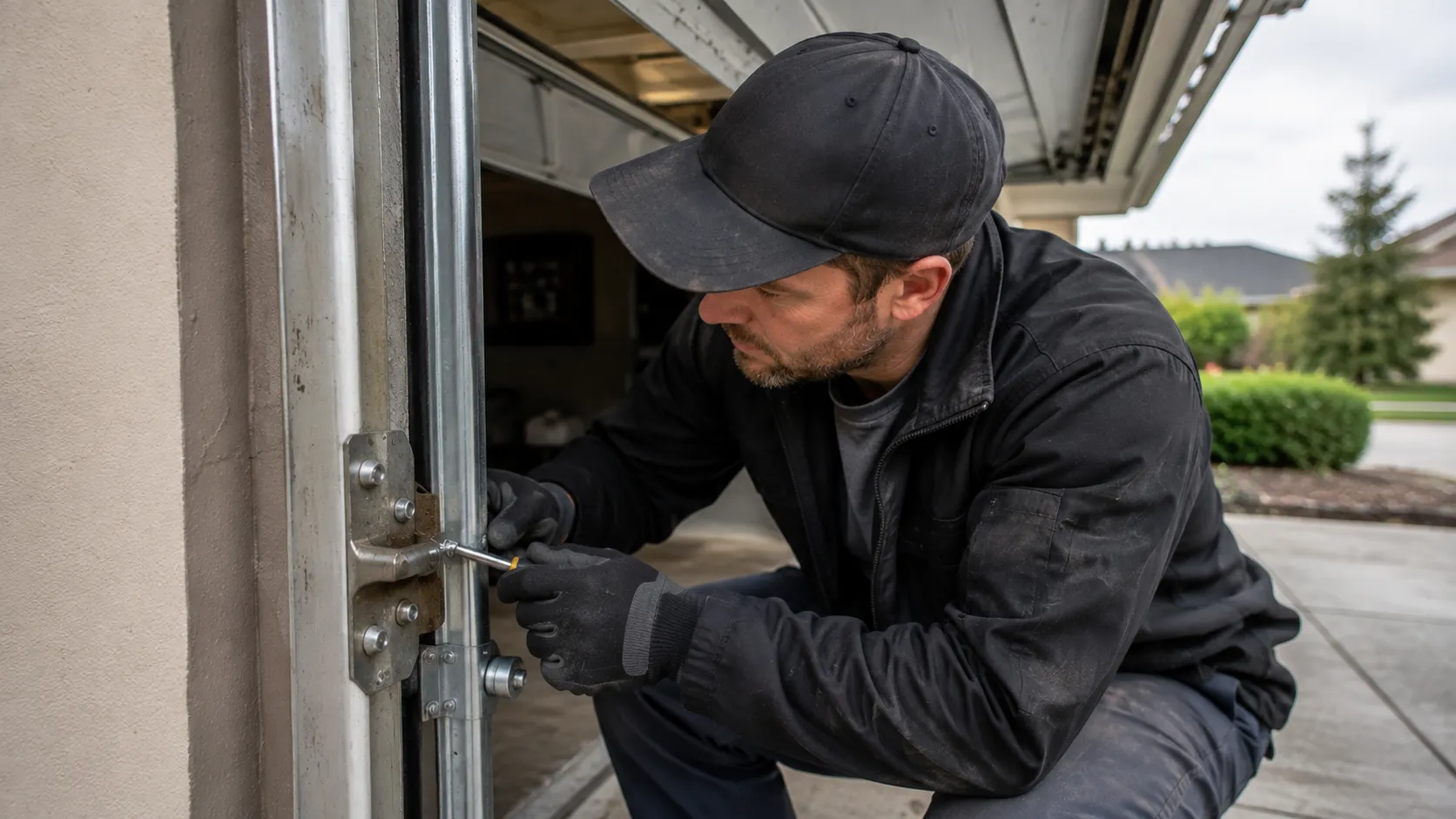
Start at the bottom seal. On houses from the 1962-2005 era, especially the 1980s builds that make up the bulk of Kent's stock, the original bottom astragal has usually hardened and cracked, and that's where cold air pours in first. Next, run your hand along the panel seams on a cold morning - if you feel a temperature difference between the steel and the air right next to it, there's no insulation layer doing any work.
Check the weatherstripping around the frame sides and top; on original doors this is often the thin vinyl strip from the build date, not a modern bulb seal. Look at the panel itself for oxidation on the inside face - condensation forms readily on bare steel in a cold garage, and over decades it pits the metal from the inside. Last, check whether the door has any composite or polystyrene backing at all; a lot of the 1980s and 90s doors across this service area were single-skin steel with nothing behind it, which you can confirm by tapping the panel and listening for a hollow ring versus a dead thud.
What we find
The Situation
Kent's housing stock runs mostly 1962 to 2005, with the typical house dating to around 1983, and that pattern holds across the 43 named areas that make up this service area, not just one pocket of town. That matters for garage doors specifically because insulation requirements for residential garage doors weren't part of standard practice when most of this housing went up. So the doors on houses built before insulation rules aren't a rare find here - they're the norm.
With 118,902 owner-occupied houses across a service area of 228,944 households, a large share of Kent garages are still running close to their original door, sometimes with a replacement opener bolted onto old hardware. At a median household income of $115,750, most owners here have the option to replace rather than patch, which changes the conversation we have with a lot of customers once we're standing in front of the actual door. The area stretches from Lakeland North and Fairwood nearby out toward Covington, SeaTac, and Burien - different pockets, same building era, same door problem showing up house after house.
How we work
What the Weather Here Does to It
Kent sits in a cold-moderate climate band - not the brutal freezes of the mountain passes, but consistent cold, damp winters that sit on a bare steel panel for months at a time. An uninsulated door with an R-value of essentially zero doesn't just let heat out during a hard freeze; it's losing heat every day the outside temperature drops below the garage's, which in this climate is most of the season. That constant temperature swing is also what drives condensation on the inside face of older panels, which is the oxidation and pitting we mentioned above - not rust from rain getting in, but rust from the metal sweating in a cold garage.
It's also why the bottom seal matters more here than it would somewhere drier: repeated freeze-thaw on a cracked vinyl astragal breaks it down faster than sun exposure alone would. None of this is dramatic weather. It's just steady, and steady is what wears an original 1980s door down over enough winters.
Questions
Common questions
Is my garage door actually uninsulated, or does it just feel cold?
If your house was built in the 1962-2005 range typical of Kent, and especially if it dates to the 1980s or 90s like most of the stock here, there's a good chance the door is single-skin steel with nothing behind it. Tap the panel - a hollow ring usually means no insulation layer. We can confirm it on a visit.
Can you add insulation to my existing door instead of replacing it?
Not in a way we'd stand behind. Foam kits don't seal the edge gaps where most of the heat loss actually happens, and stripping an original panel to refit it usually costs close to what a new insulated door runs. For most of these older Kent doors, a seal and weatherstripping upgrade is the honest middle option.
Why does my garage door sweat and rust on the inside?
That's condensation from Kent's cold-moderate winters meeting bare, uninsulated steel. The metal cools faster than the air around it, moisture forms on the inside face, and over enough winters that turns into pitting and rust that starts from the inside out, not from rain.
Ready when you are
Need a garage door sorted in Kent?
Kent Garage Door Co repairs and installs garage doors, springs and openers in Kent, WA and the surrounding area.