Des Moines, Kent

Commercial Garage Door Repair for Des Moines Buildings

Des Moines commercial buildings run older than Kent's typical stock, median year 1974. We service rolling steel and sectional doors from Kent, 5 miles out.

Commercial Garage Door Repair for Des Moines Buildings in Kent
Serving Kent, WABackground-checked techsHonest, upfront pricingFast local response

Pricing

What It Costs

We don't quote a price sight-unseen, and we're not going to pretend otherwise here. What we can tell you is what drives the number up in Des Moines specifically: the median building here dates to 1974, almost a decade older than the typical structure across the rest of our service area, where the median lands around 1983. That gap matters on commercial jobs. A rolling steel door or sectional commercial unit installed in the mid-1970s often runs on hardware that's been discontinued, so a repair sometimes means sourcing a compatible part rather than grabbing an off-the-shelf match. That adds time and cost that a newer building in Covington or Fairwood wouldn't need. If your dock door or drive-through bay still has its original chain hoist or torsion assembly, expect the estimate to include a look at whether the whole assembly is worth saving versus replacing the operator and leaving the door shell in place. We give you that number before we touch anything, not after.

What It Costs

Watch-outs

What Can Go Wrong

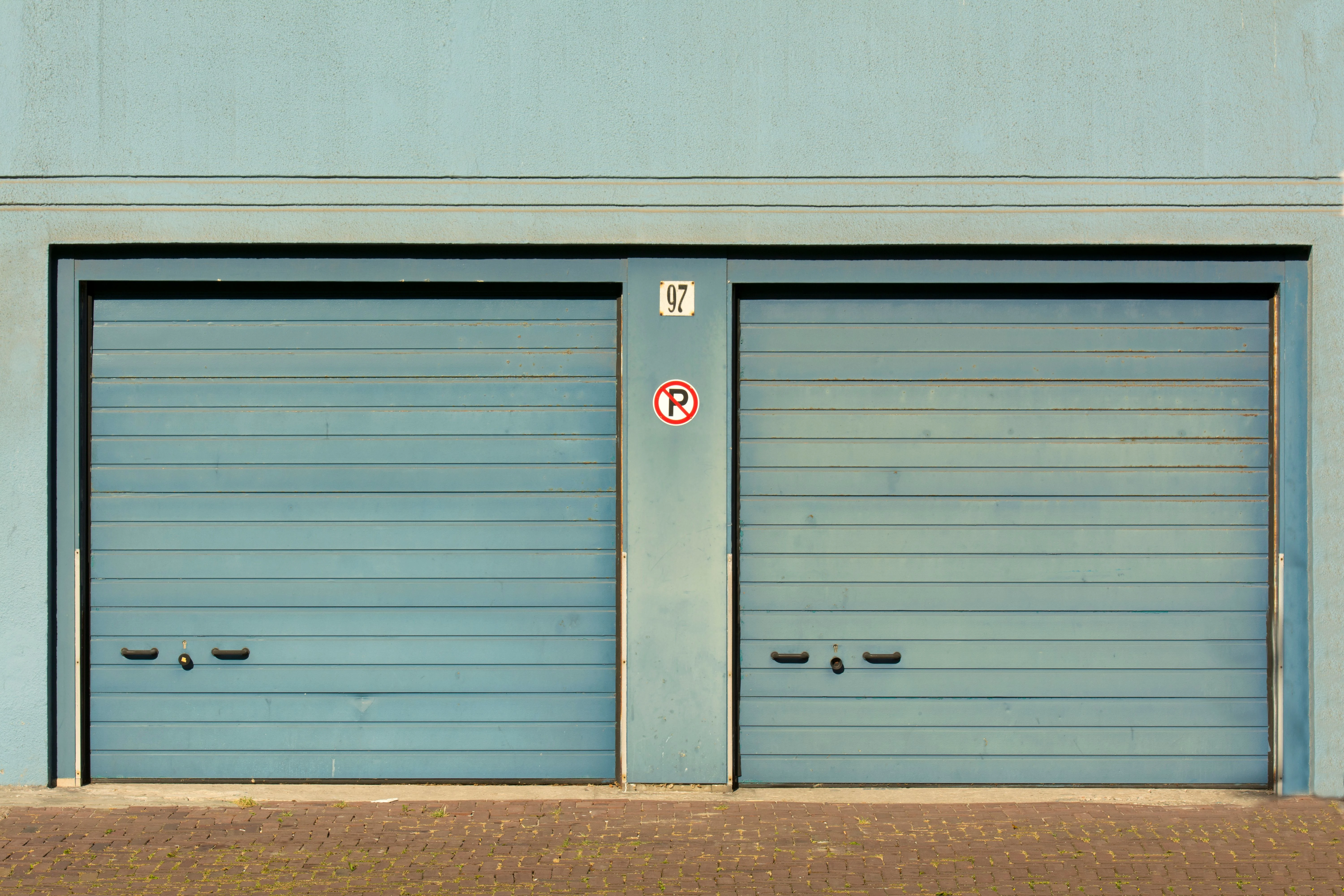
Buildings from the early-to-mid 1970s in this area tend to run steel rolling doors or early sectional commercial doors on chain-driven hoists, and the failure points are predictable once you've seen enough of them.

Worn hardware problems

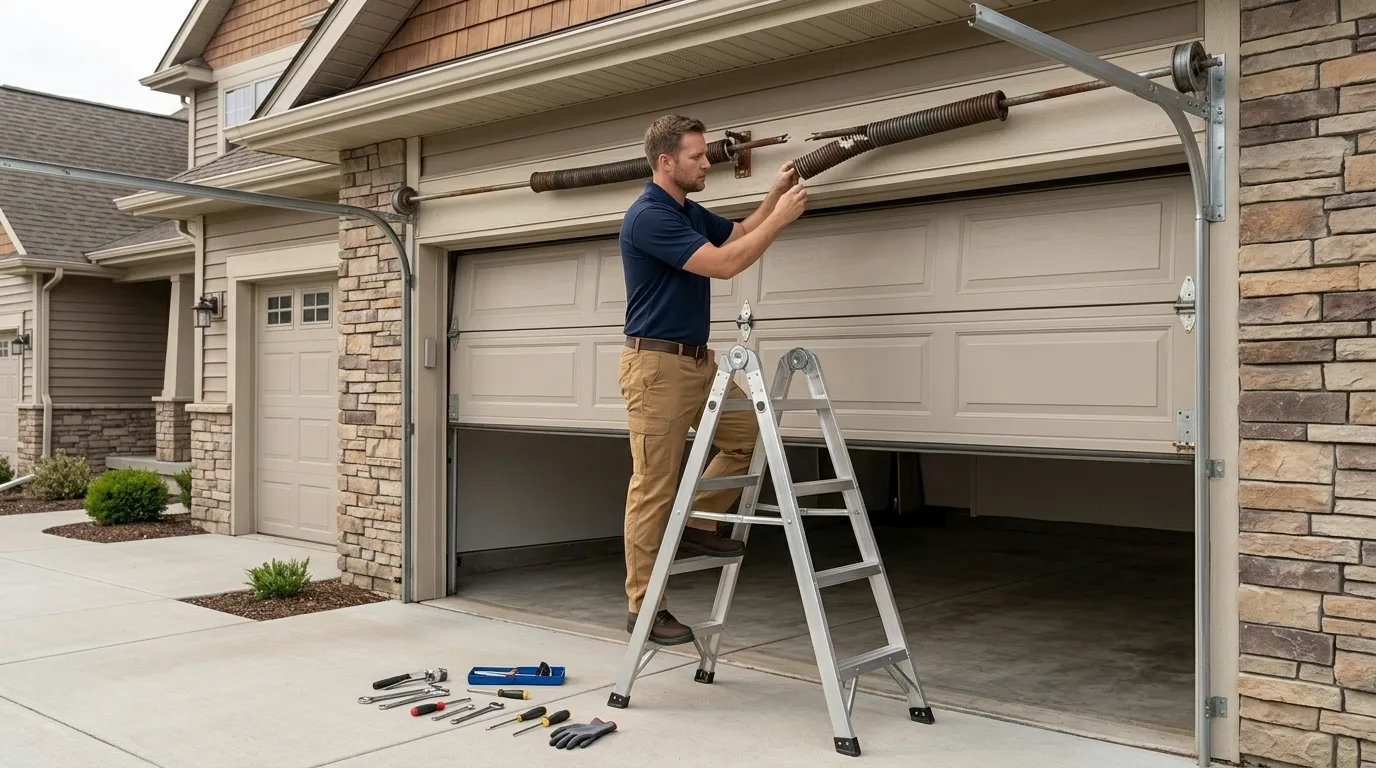
Cable drums wear oval instead of round after decades of cycling. Torsion springs sized for a door that's been repainted or had panels swapped no longer match the actual weight they're lifting, so they either sag the door or slam it.

Framing loosening issues

Track brackets bolted into wood framing from that era loosen as the building settles, and the door starts running out of square. On drive-through and loading dock units, the bottom seal hardens and cracks from years of exposure, letting in the kind of moisture that eventually rusts out the bottom panel from the inside.

Common aging problems

None of this is unique to any one property, but it's common enough on a 1974-median building stock that we plan for it before we open the panel.

What Is on the Truck

On the truck

What Is on the Truck

For commercial calls in this part of the service area we carry stock sized for older rolling steel and sectional doors, not just the current residential sizes: heavier gauge cable, drum sets in a couple of common bore sizes, torsion springs across a wider wind range, and chain hoist sprockets and chain to match hoist-operated doors rather than only belt or screw-drive residential openers. We also carry photo-eye retrofit kits, since a lot of older commercial doors around here predate the safety-eye requirement and get flagged during an insurance or lease inspection. What we don't carry is every obsolete part. If a door uses a proprietary track bracket or a hoist casting that hasn't been made in twenty years, we tell you that on site rather than stalling the job pretending we can improvise a fix that won't hold.

What Causes It Around Here

Local causes

What Causes It Around Here

This area sits in a cold-moderate climate band, and on commercial steel doors that means slow corrosion rather than dramatic weather damage. Condensation forms on the inside face of an uninsulated steel rolling door overnight, and over enough winters that moisture works into seams and fastener holes, especially on doors that haven't been repainted since installation. Ground movement is the other factor: older slab-on-grade commercial buildings settle unevenly over decades, and a door that ran true in 1985 can be a half-inch out of square by now. That throws tracks out of alignment gradually, so the door doesn't fail all at once - it just gets louder and harder to close until one day the roller jumps the track. We see both patterns often enough on 1970s-era commercial stock that we check for them on every service call, not just the ones called in as emergencies.

Downtime

How Long You Are Without the Door

We run out of Kent, about 5 miles from Des Moines, and we don't keep a branch or standing crew here, so we're not going to promise a same-hour window we can't back up.

Same-visit repair possibility

What we can say is that once we're on site, the timeline depends mostly on parts. A standard spring or cable swap on a commercial door is usually a same-visit fix if we're carrying the right stock.

Parts ordering delays

A hoist casting, a proprietary track section, or anything that has to be special-ordered pushes the job into a second visit, sometimes a wait of several days depending on the supplier.

Temporary fix options

If your building depends on that dock door for daily operations, tell us that up front when you call - it changes how we sequence the repair and whether we recommend a temporary fix to keep the door operable while the real part is in transit.

DIY or pro

Doing It Yourself

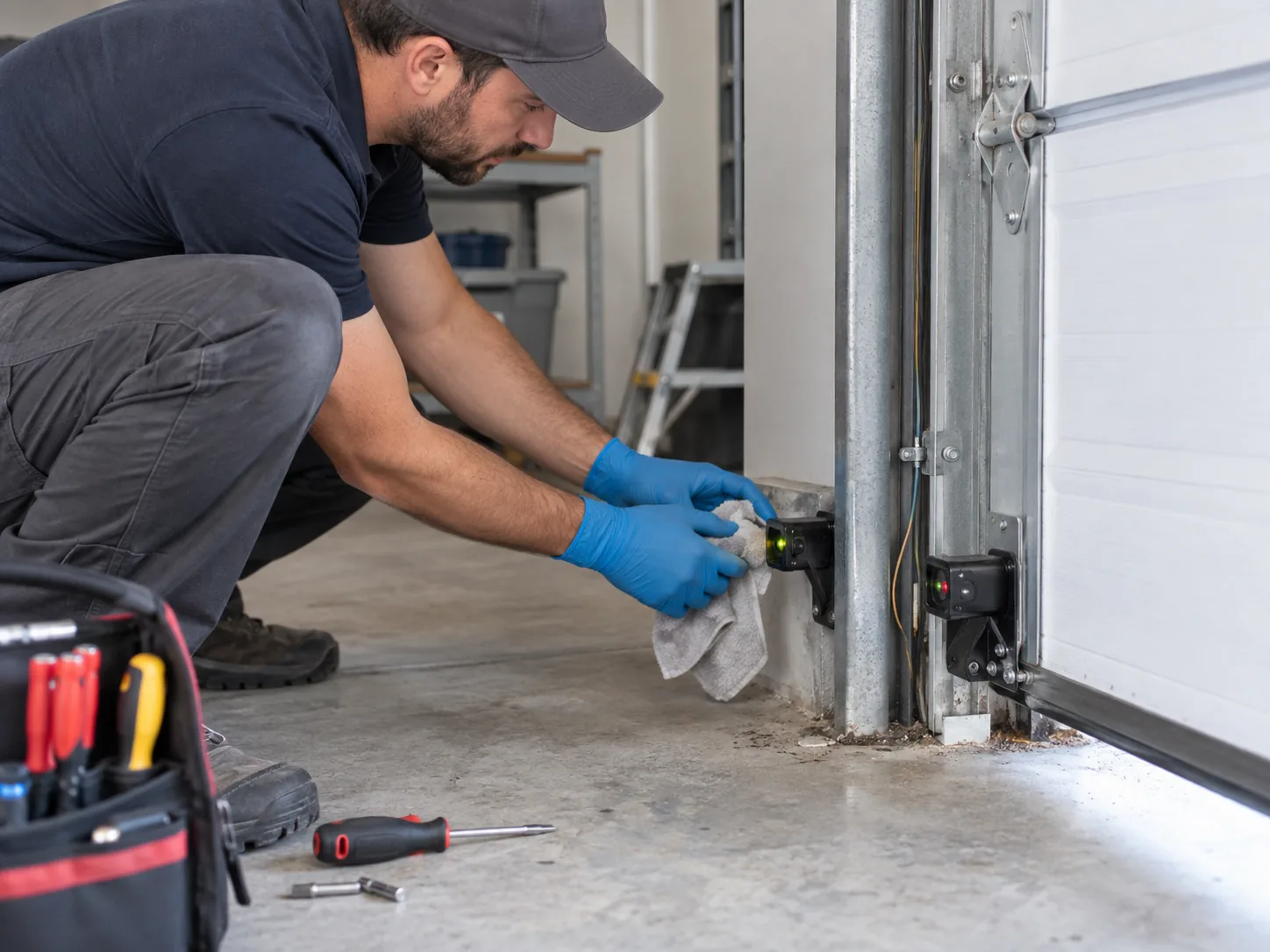
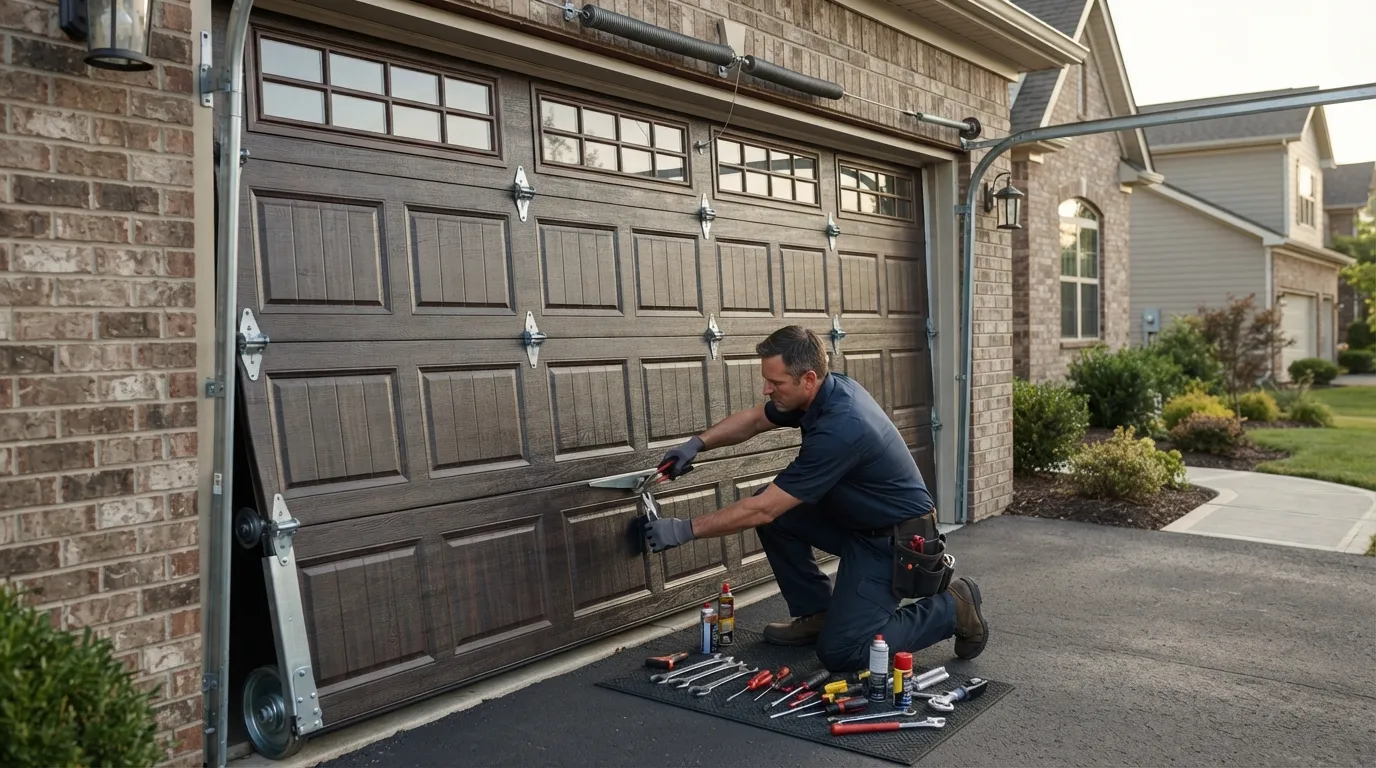
There's a short list of things worth doing yourself on a commercial door and a much longer list that isn't. Cleaning and lubricating rollers and hinges, checking that the photo eyes are aligned and unobstructed, and visually checking cables for fraying are all fine to do without us. Adjusting torsion spring tension, replacing cables under load, or working on a chain hoist while the door is anything but fully down and disconnected is not something to take on, commercial or residential. On a door this size, the stored energy in a torsion spring or a loaded chain hoist can put someone in the hospital, and on an older 1970s-era unit the spring may already be under uneven tension from decades of wear that isn't obvious just looking at it. If the door won't close square, is making a new noise, or the safety eyes have started failing intermittently, that's a call, not a weekend project.

Doing It Yourself

Questions

Common questions

Do you have a location in Des Moines?

No. We run commercial calls in Des Moines out of our Kent location, about 5 miles away. There's no standing crew or branch here, so scheduling depends on our route out of Kent that day rather than a guaranteed same-hour window.

Why does an older commercial door in Des Moines cost more to fix than a newer one?

Buildings here run older on average, median year 1974, than the wider service area's 1983 median. Older rolling steel and chain-hoist doors sometimes use discontinued hardware, so a repair can mean sourcing a compatible part instead of an off-the-shelf match, which adds time and cost.

What commercial door types are most common in Des Moines buildings?

Given the building stock here dates mostly to the early-to-mid 1970s, we see a lot of rolling steel doors and early sectional commercial doors running on chain-driven hoists rather than the belt or screw-drive operators typical of newer construction.

Can you retrofit safety eyes on an older commercial door?

Yes. Older commercial doors from before the safety-eye requirement often need this for an insurance or lease inspection, and we carry retrofit kits for that on commercial calls in this area.

Ready when you are

Need a garage door sorted in Kent?

Kent Garage Door Co repairs and installs garage doors, springs and openers in Kent, WA and the surrounding area.

CallGet a quote