
Worn opener symptoms
The chain drags at the same spot every cycle. The remote works from the driveway but not from the street. The unit grinds through its travel and stops short of full open, so the door never seats right at the bottom either.
Kent, WA
Opener installation for Kent homes built mostly between 1962 and 2005, matched to the drive hardware and weather these houses actually have.
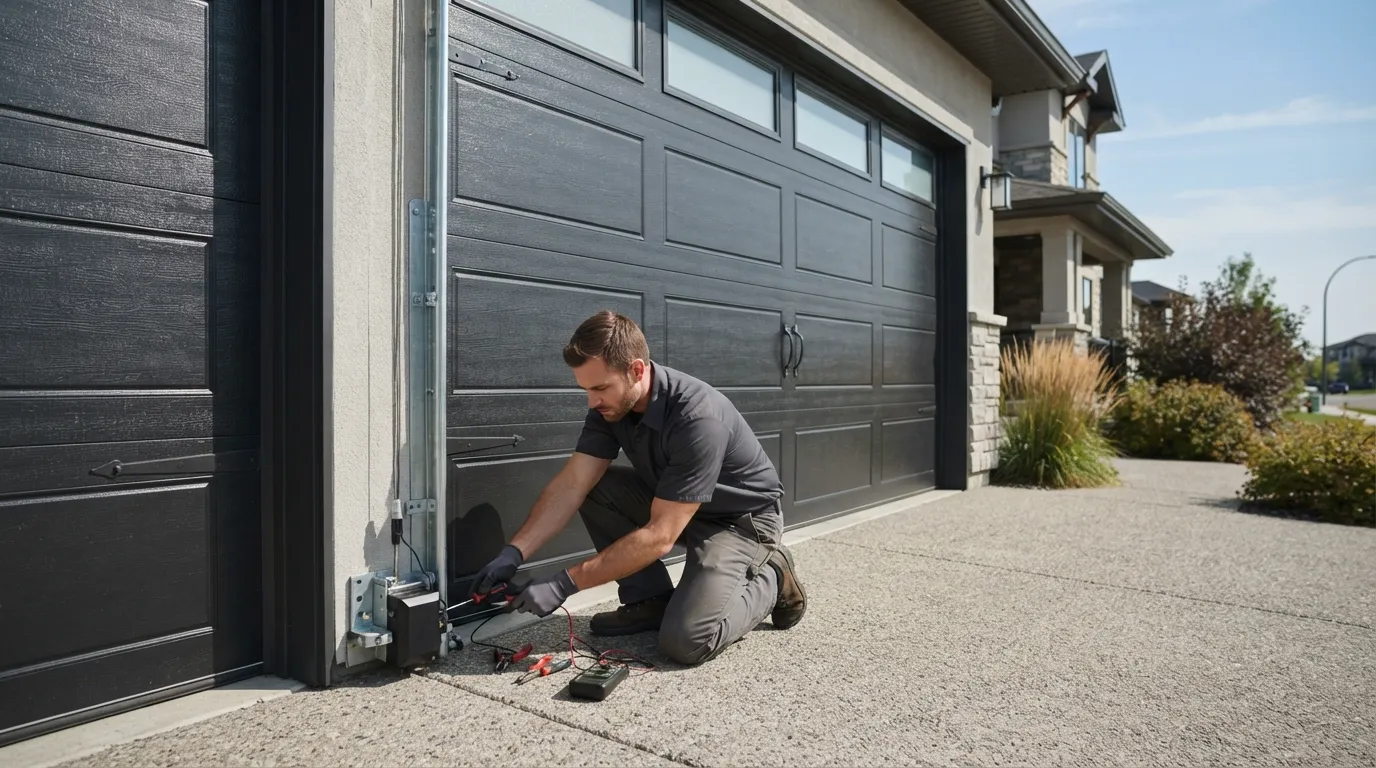
Warning signs
Most calls start the same way: the opener still runs, but something about it has started to bother the homeowner enough to look up a replacement instead of another repair.
The chain drags at the same spot every cycle. The remote works from the driveway but not from the street. The unit grinds through its travel and stops short of full open, so the door never seats right at the bottom either.
In homes built in the median era for this area - early 1980s - the opener that's failing now is very often the second or third one the house has had, a mid-2000s chain or belt unit installed as a swap-in for whatever came with the house.
It was never matched to the door's weight or the garage's headroom, and it shows: short cycle life, a motor that runs hot, a logic board that stopped taking new remotes years ago. Homeowners across this service area of 228,944 households tend to notice the same pattern once they start comparing notes with neighbors on similar-vintage streets.
Local causes
Housing in this part of the county runs 1962 through 2005, with the median build landing around 1983, and that matters more for openers than most people expect. A house from that window was framed for a garage door and opener setup that predates today's safety standards - no photo-eye reversal, no battery backup, drive rail geometry sized for a lighter door than the insulated double panels many owners have since installed. Swap the door and keep the old-spec opener, and the motor is working harder than it was built for every single cycle. The climate band here is cold and moderate, not extreme, but it's enough that grease in an old gearbox thickens on the coldest mornings and the motor draws harder on startup - which is exactly when an aging capacitor or worn gear finally gives out. None of this is dramatic. It's just a lot of houses of the same age, on the same rough opener replacement schedule, hitting the same failure points around the same time.
Watch-outs
An opener that's failing slowly is a nuisance. One that fails badly is a safety problem. Old units without working auto-reverse are the ones that keep closing on a car bumper or a bike instead of backing off - a code violation now, not just an inconvenience.
A drive gear that strips mid-cycle can drop a door that isn't fully supported by its springs, and on a heavier insulated door that's real weight coming down fast. Battery-less units leave a homeowner locked out or locked in during a power outage, which in this area's cold-moderate winters is worse than it sounds.
And a logic board that's slowly losing remotes is often one storm surge or brownout away from losing all of them at once, at which point the only way in is the emergency release and a stepladder. None of these are rare edge cases - they're the ordinary end point for an opener that's outlived the door it was matched to.

The repair
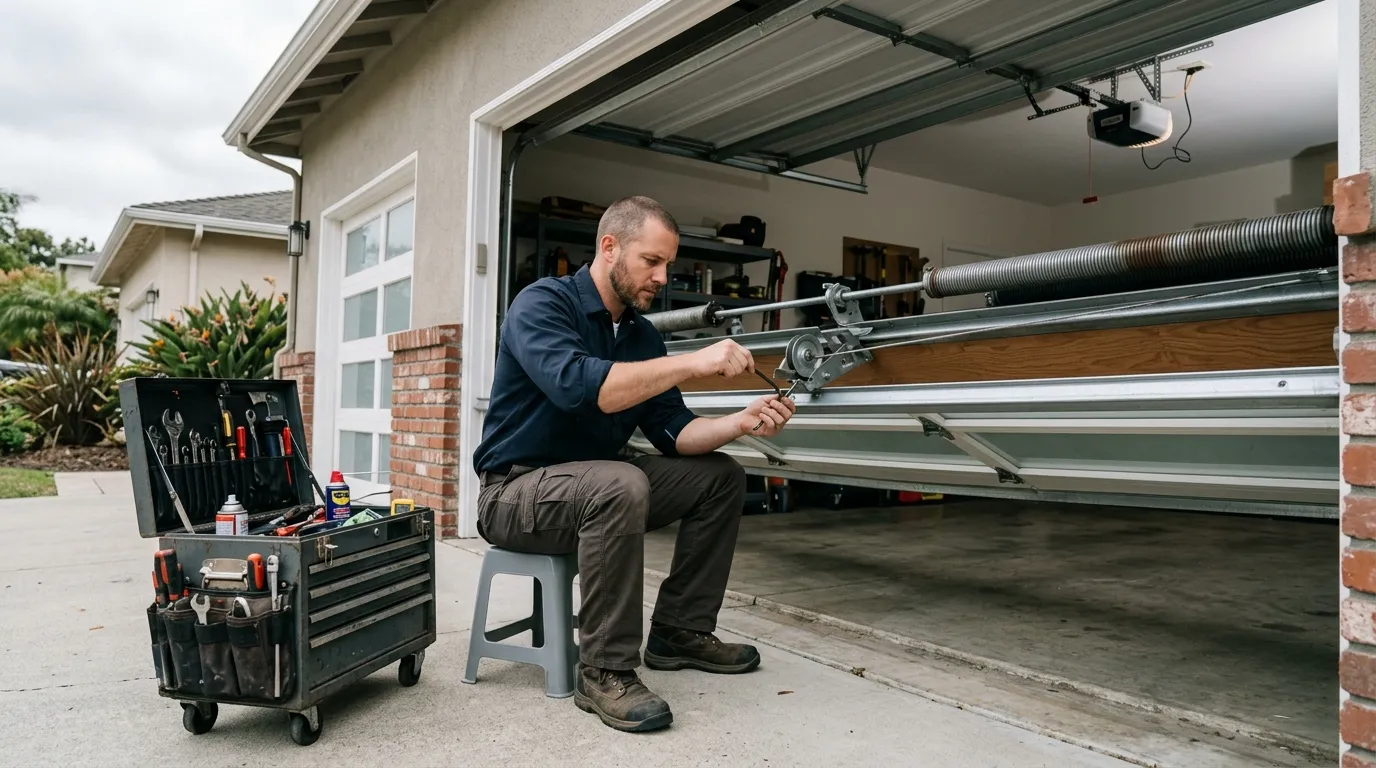
A proper opener installation starts with the door, not the motor - we check the weight, the balance, and the spring setup before picking a unit, because an opener sized for a light original-era door will burn out fast on a heavier insulated replacement. From there it's mounting the rail, setting travel limits, wiring in the safety sensors, and programming remotes and any keypad or app control the homeowner wants. On houses from this area's typical 1980s-90s stock, we usually also end up replacing worn header brackets or a sagging rail support bracket that the old opener was quietly straining against for years - that's included, not an upsell. One honest limit: if the door itself is out of balance or the spring is undersized for its weight, a new opener won't fix that, and we'll say so rather than bolt a new motor to a bad problem. Lead time on higher-end belt-drive units with battery backup can run a few days longer than standard chain-drive stock, so we'll tell you that up front too.
Questions
Not always, but check the weight first. If your current opener was sized for a lighter original-era door and you're installing a heavier insulated replacement, the motor will be underpowered and wear out faster. We test the match before recommending a new unit rather than assuming you need one.
Cold thickens the grease in an aging gearbox and makes the motor draw harder on startup. In this area's cold-moderate climate that's not extreme cold, but it's enough to push a marginal capacitor or worn gear past its limit right when you need the door most.
Standard chain-drive installs are usually done in one visit. Belt-drive units with battery backup sometimes take a few extra days to get in stock, which we'll flag before scheduling so there's no surprise on timing.
Only if the opener itself is the problem. If the door is out of balance or the springs are undersized, a new opener will strain the same way the old one did. We check balance and spring condition before installing so you're not paying to repeat the same failure.
Explore more
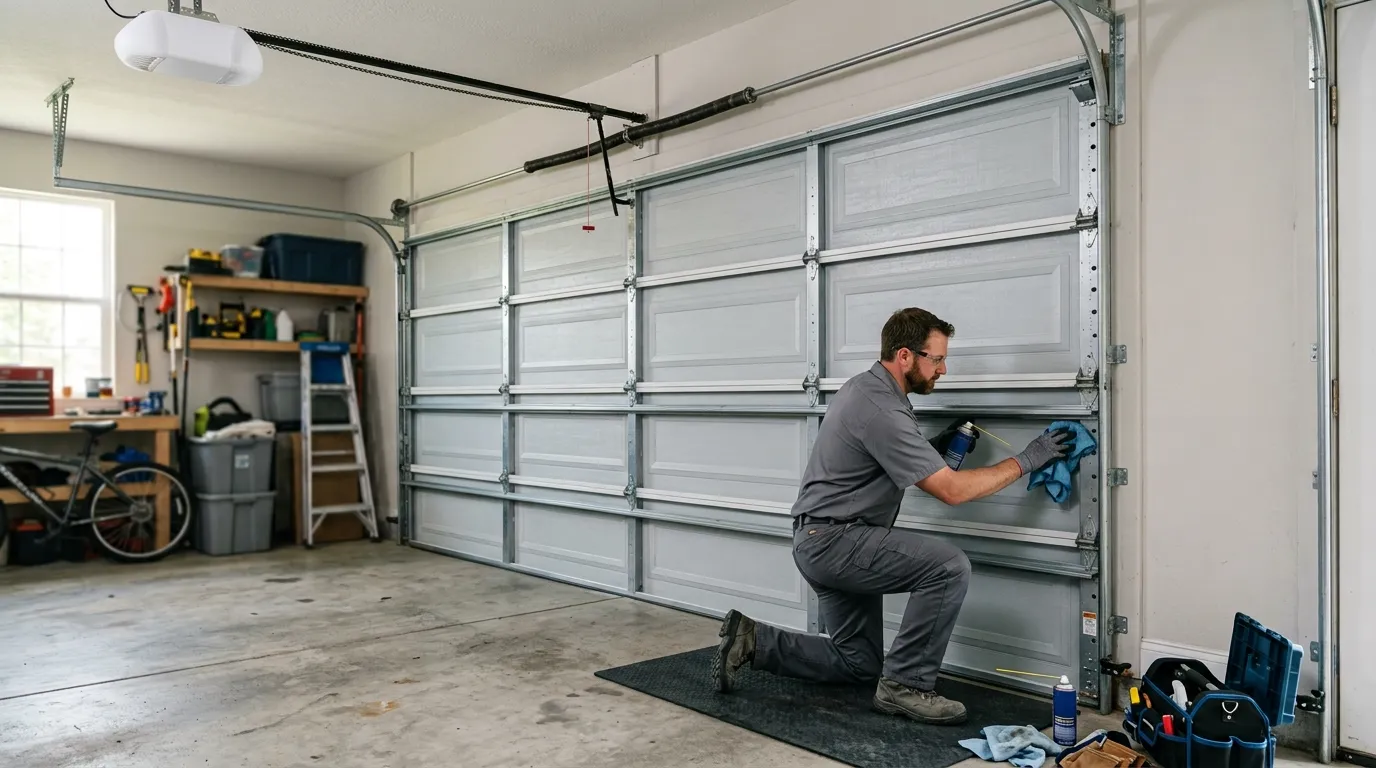
Ready when you are
Kent Garage Door Co repairs and installs garage doors, springs and openers in Kent, WA and the surrounding area.