Kent, WA

Garage Door Off Track: Why It Happens Around Kent

Off-track doors are common in Kent's 1960s-2000s housing stock. Here's why it happens, what it damages, and what a proper fix involves.

Garage Door Off Track: Why It Happens Around Kent in Kent
Serving Kent, WABackground-checked techsHonest, upfront pricingFast local response
1962–2005
Typical build years of local homes
1983
Median year homes were built
Cold winters
Climate that shapes door wear

Warning signs

How It Shows Up

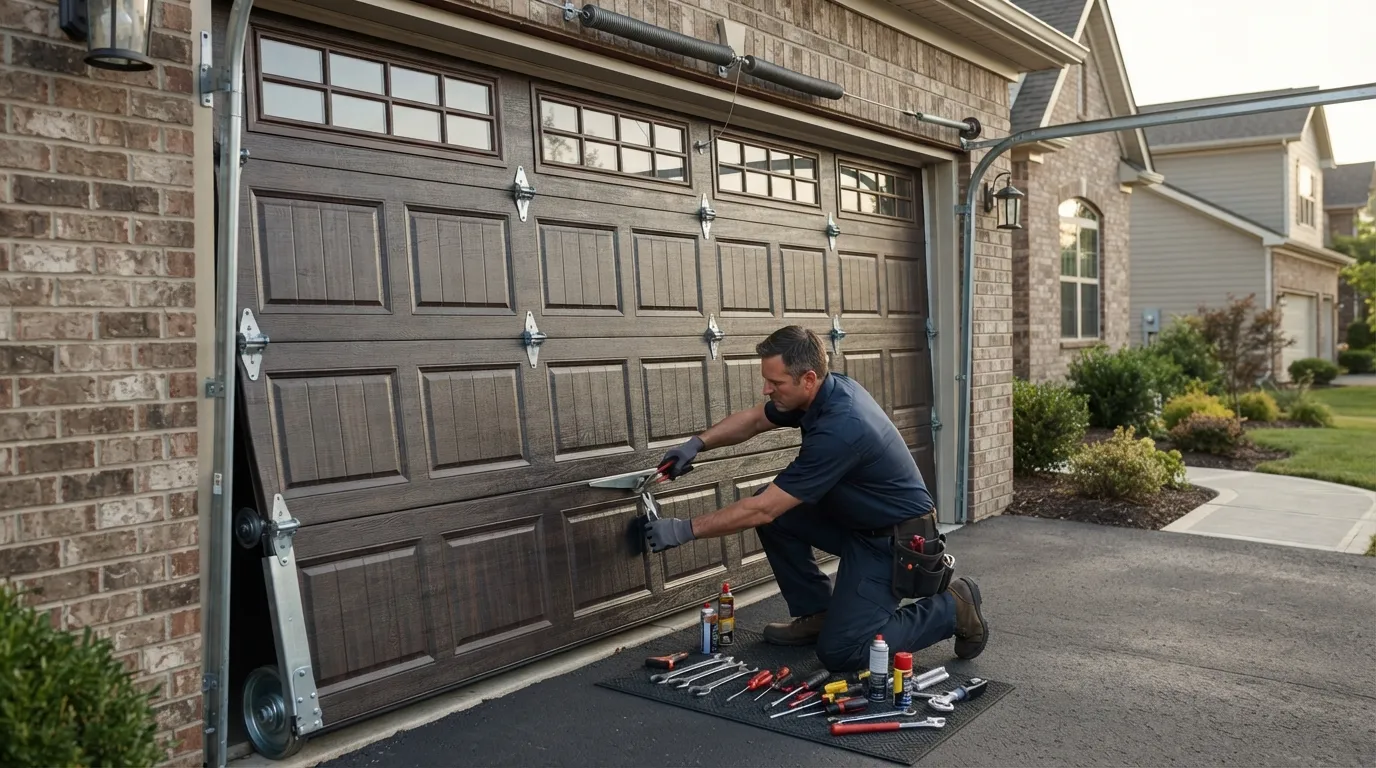
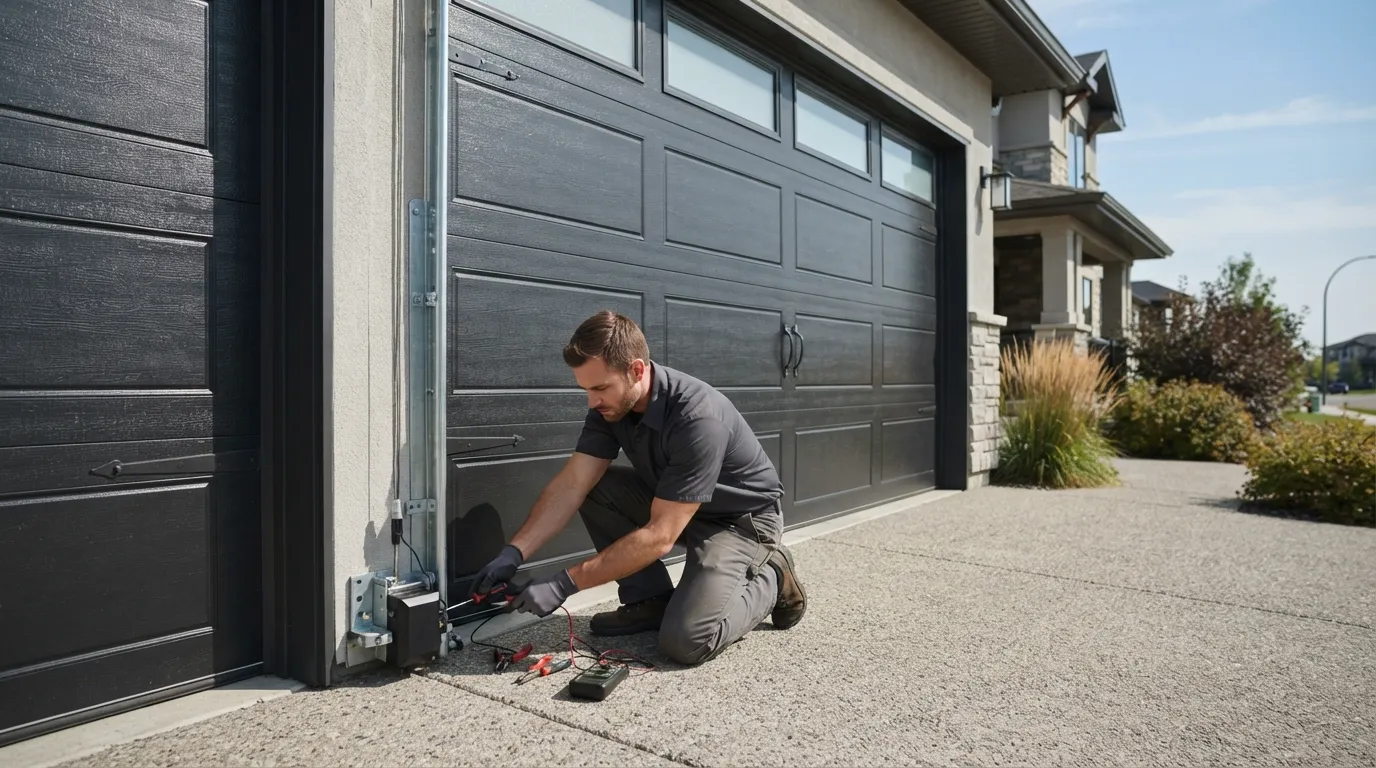
A door off its track rarely fails all at once. Most owners notice one side dropping lower than the other as the door closes, or a roller popping visibly out of the track channel near the bottom bracket.

Roller jam symptoms

Sometimes the door stops mid-travel and won't budge either direction because a roller has jumped the rail and jammed against the track wall. You might hear a grinding or scraping sound instead of the usual roll, or see a visible gap between the track and the wall where a bracket has pulled loose.

Cold weather symptoms

In cold months the symptoms often show up first thing in the morning, when a door that closed fine the night before hangs crooked or won't seat in the weatherstrip. None of these are cosmetic.

Side load consequences

A door running even slightly off-square puts side load on the opener and on cables that were never built to pull at an angle, and that load compounds every time the door cycles.

Local causes

What Causes It Around Here

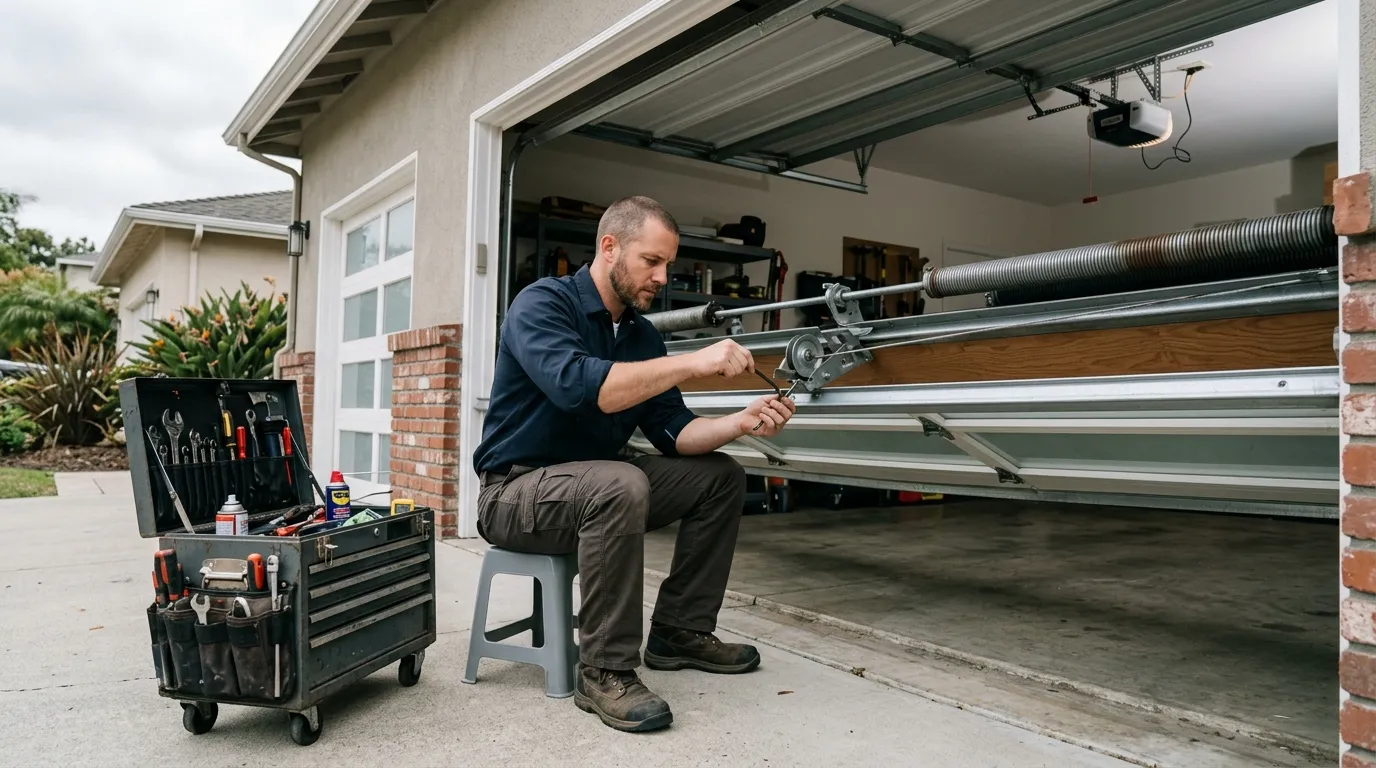
Kent's service area is mostly 1980s-90s construction, with the broader housing stock running 1962 to 2005 and a median build year around 1983. Doors and track hardware installed in that window are now 20 to 60 years into a service life the manufacturers didn't design for much past 20 to 25. Track brackets loosen in the framing, horizontal rails sag a fraction of an inch, and rollers wear down enough that they no longer sit flush in the channel. Add a cold-moderate climate: temperature swings between a mild afternoon and a freezing overnight make steel track contract and expand, which loosens lag screws in the jamb a little more each season. None of that is unique to one house - it's the shared condition of a service area where most garage doors and their original hardware are the same age as the roof over them.

What Causes It Around Here

Watch-outs

What Can Go Wrong

Left alone, an off-track door doesn't fix itself and it doesn't stay a small problem. A roller that's jumped the rail will keep grinding against the track wall, wearing a groove into the aluminum or steel that eventually won't hold the roller at all.

Opener strain from binding

If the door is on an opener, the opener's motor keeps trying to pull a door that's binding, which strains the drive gear and can burn out a unit that would otherwise have years left.

Cable fraying hazards

Cables under uneven tension from a crooked door are the bigger risk - a cable that's rubbing against a misaligned track can fray and snap, and a door coming down on a snapped cable is a hazard to anything or anyone underneath it.

Panel damage sequence

Panels take damage too: a bottom section forced through a track that's bent even slightly out of parallel will crack or bow at the seam. None of this is scare talk - it's the sequence of what actually fails once the alignment is off.

The repair

What the Fix Involves

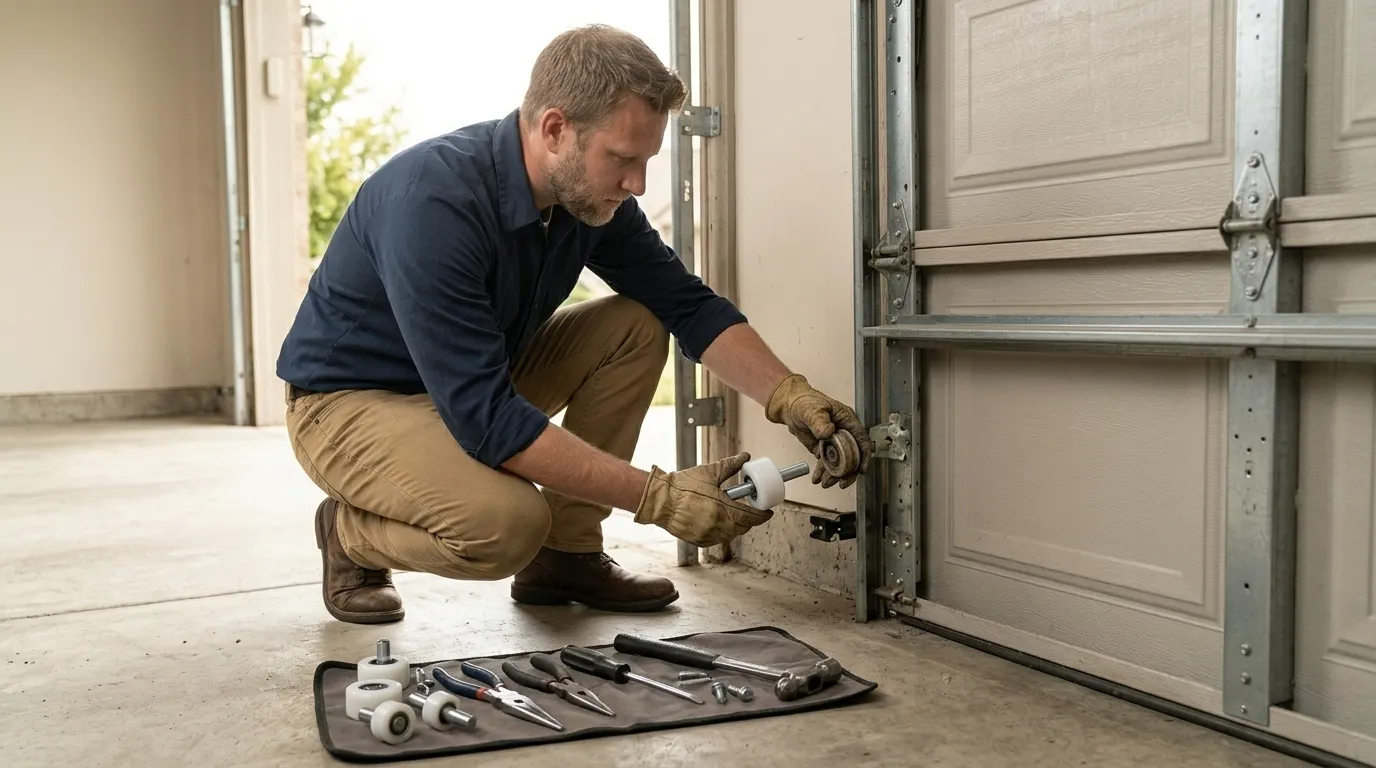
The right fix depends on how far things have gone. If a roller has simply jumped the rail without bending anything, reseating it and tightening the track brackets back to the jamb studs is often the whole job.

  1. Bent track replacement

    If the track itself has bent - which happens when a door has been run off-track for a while - that section needs to come off and be replaced, not hammered back into shape; a track that's been straightened once will bend again sooner.

  2. Balance and tension checks

    We also check cable tension and spring balance on any off-track call, since a spring that's out of adjustment is often what pulled the door crooked in the first place.

  3. Rotted framing limitations

    One limitation worth saying plainly: if the track is original to a house built in the 1962-2005 window and the brackets have pulled out of rotted or shimmed framing, we're not going to just re-screw them into the same soft wood - that's a repair that fails again in a season, and we'll say so before we quote it.

Questions

Common questions

Can I push the door back onto the track myself?

You can sometimes reseat a roller that's barely off the rail, but doing it with the door under spring tension is how fingers get pinched and cables get pulled further out of line. If the door won't move freely by hand with the opener disconnected, leave it and call - forcing it usually turns a bracket repair into a track replacement.

Why does this happen more in winter?

Steel track contracts in the cold and expands again on milder days. In a cold-moderate climate like this area's, that daily swing works lag screws loose in the jamb over years, especially in houses built in the 1962-2005 window where the original hardware is still in place.

Is a bent track ever worth straightening instead of replacing?

Rarely. A track that's bent enough to throw a roller has usually taken a hit that weakened the metal, and straightened track tends to bend again at the same spot within a season. Replacing that section is the more honest fix, even though it costs more upfront than bending it back.

Will an off-track door damage my opener?

Yes, if it runs that way for more than a cycle or two. The opener's motor and drive gear aren't built to pull a door that's binding against a bent or misaligned track, and continued use is a common way we see openers fail early.

Ready when you are

Need a garage door sorted in Kent?

Kent Garage Door Co repairs and installs garage doors, springs and openers in Kent, WA and the surrounding area.

CallGet a quote