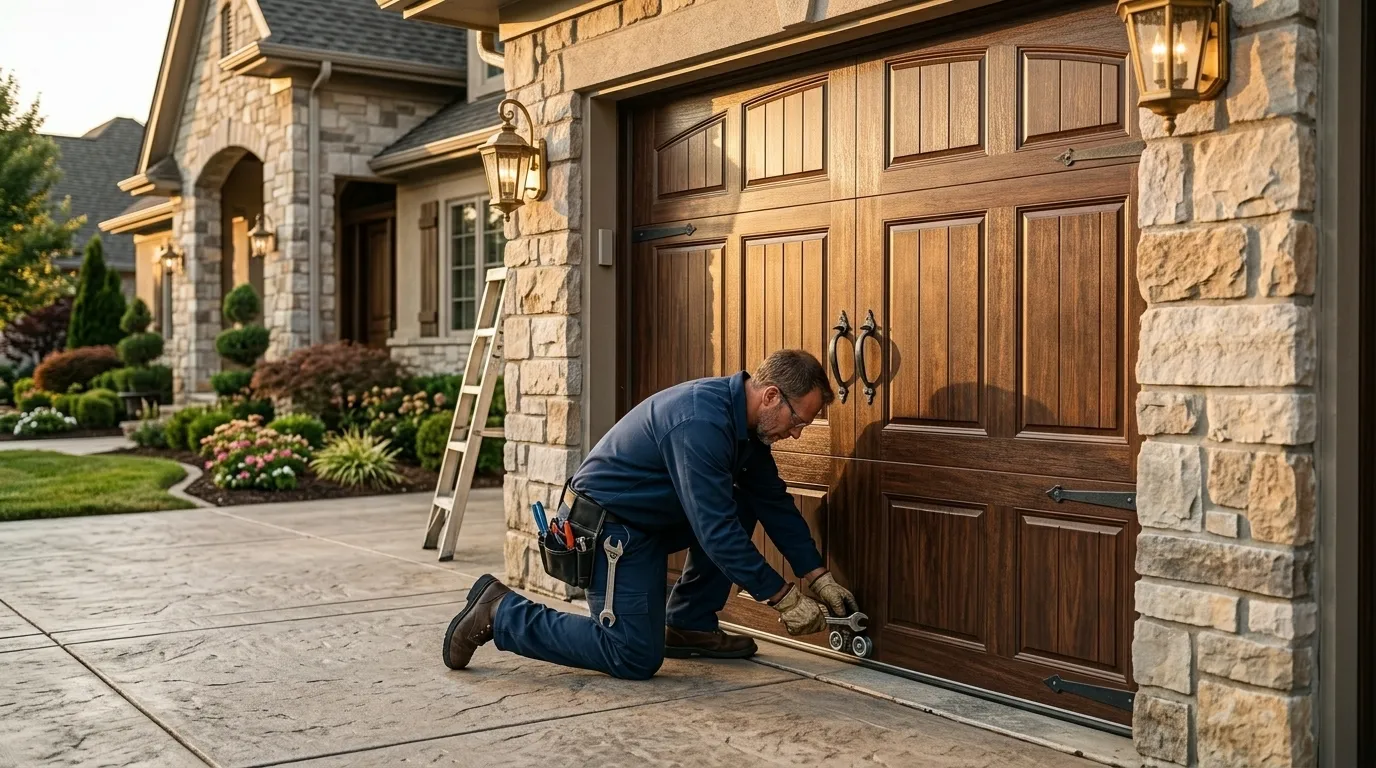
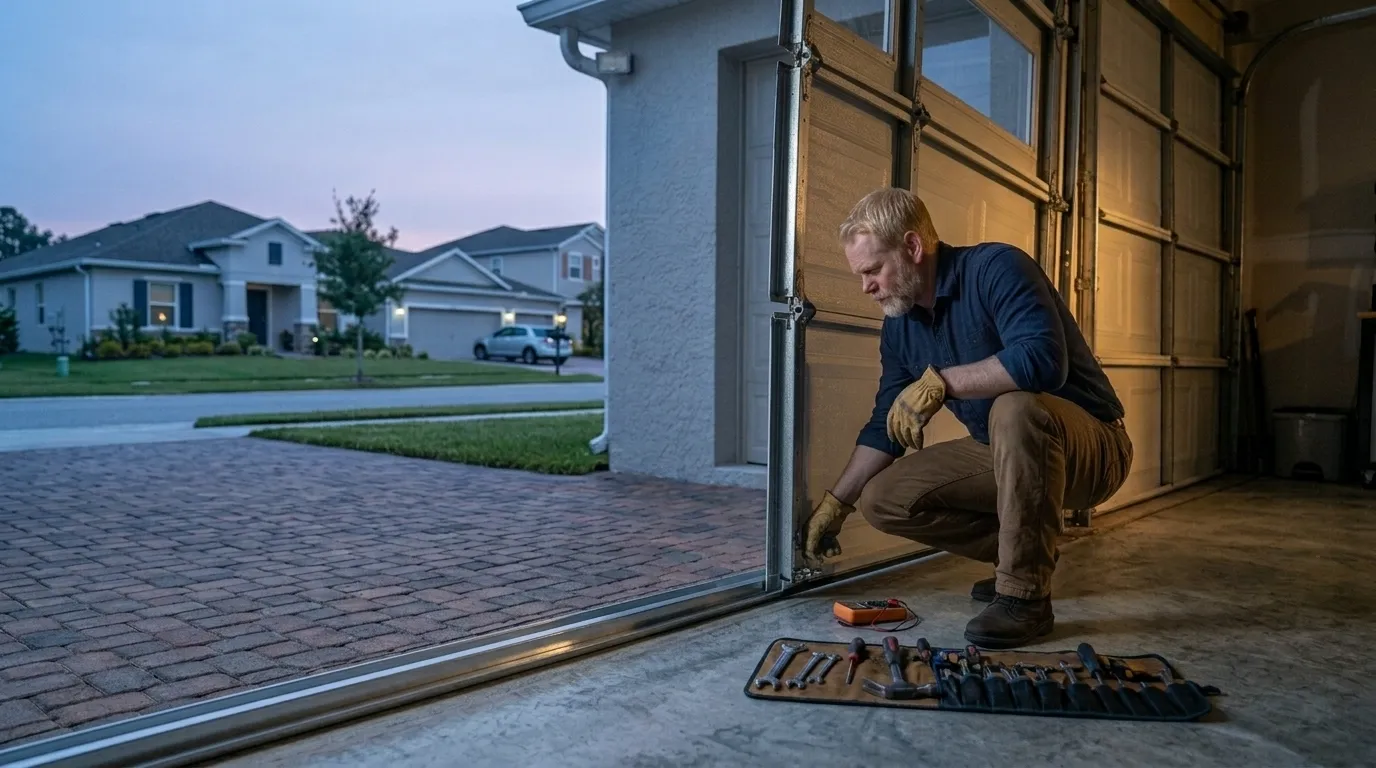
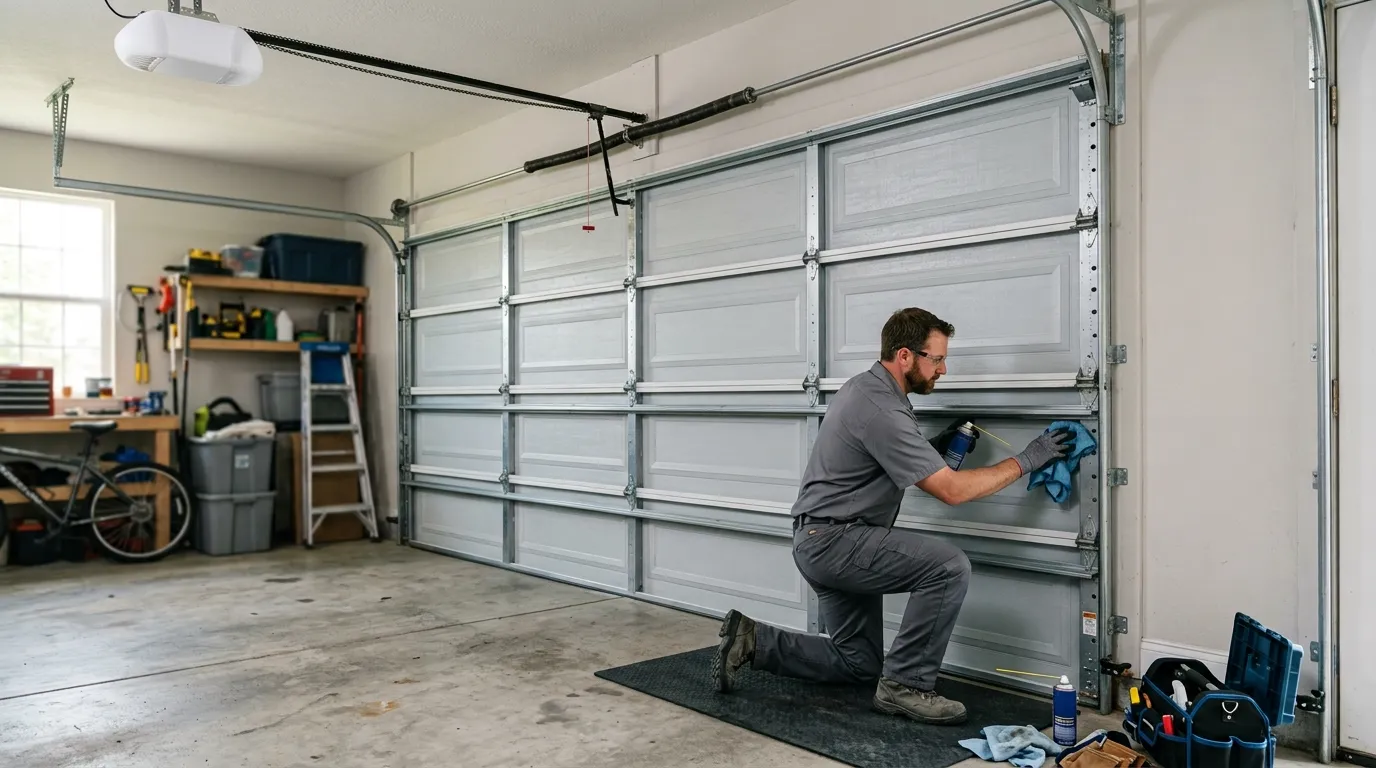
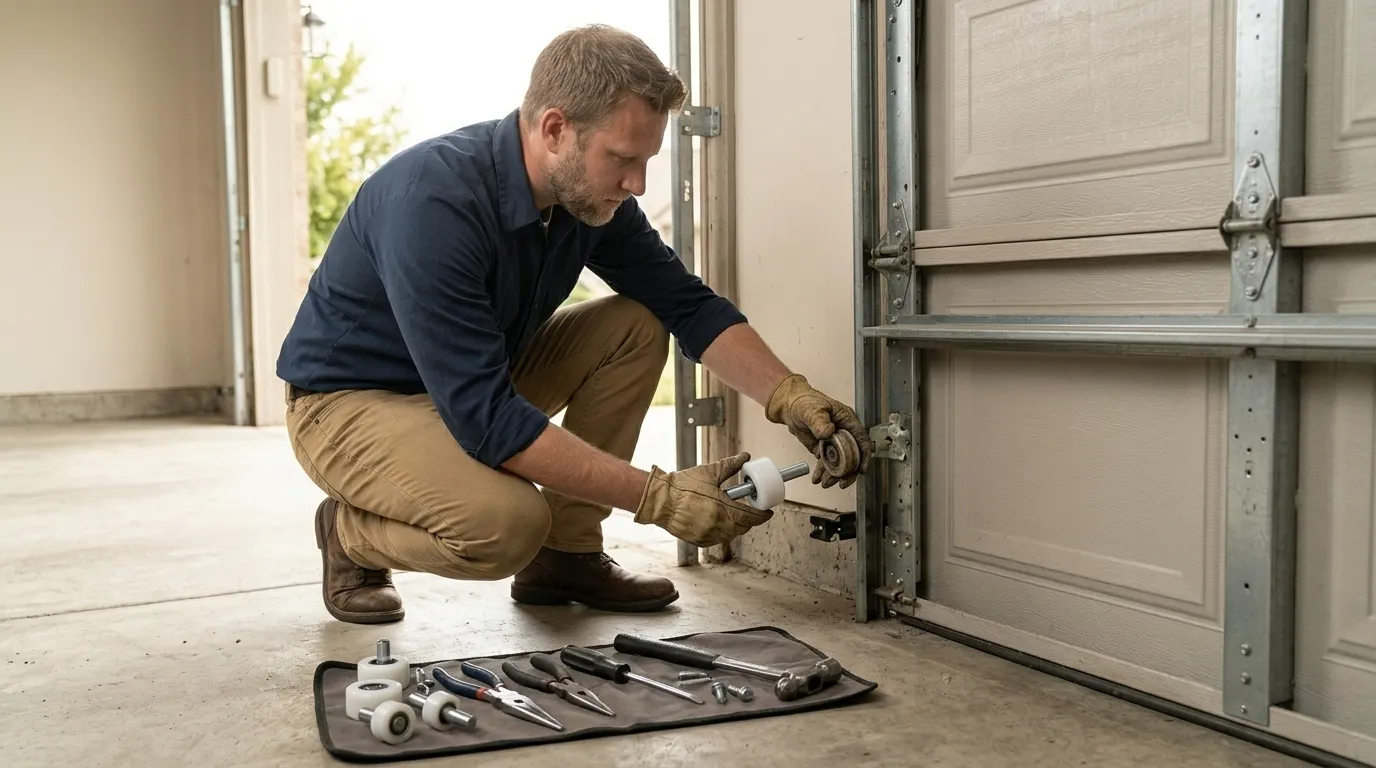
This whole corridor sits in a cold-moderate climate band, which sounds mild until you think about what it actually does to steel doors that cycle open and shut dozens of times a day. Temperatures swing enough through the year that grease on tracks and hinges thickens up in the cold months and runs thin in the warm ones, so the same door behaves differently season to season if nobody's rebalancing it. Damp air off the valley floor works into any exposed hardware - hinges, bottom brackets, roller stems - and starts surface rust before anyone notices a change in sound.
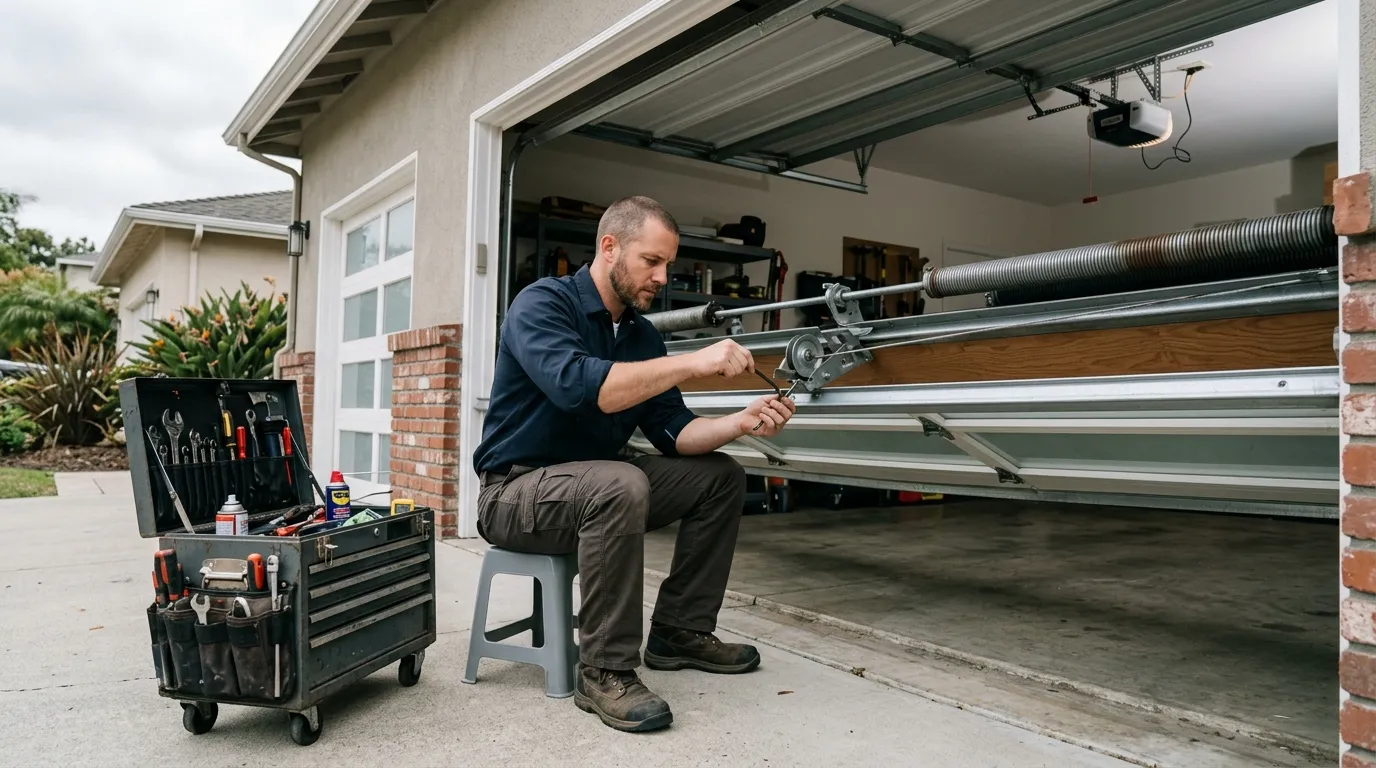
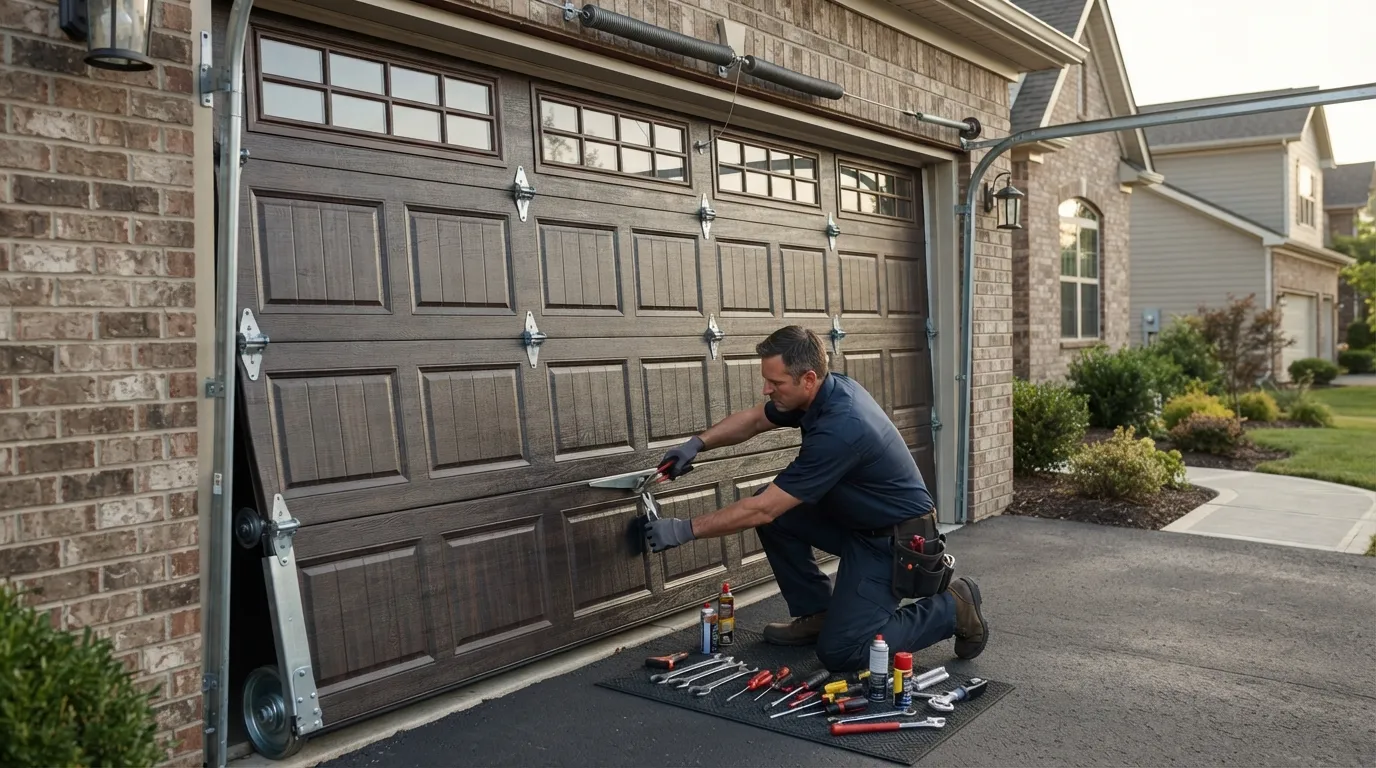
Spring tension is the other half of it. A torsion spring set correctly in July doesn't necessarily hold that same tension through a cold stretch, and a commercial door - heavier than anything on a house, often 12 to 16 feet wide - puts a lot more load on that spring than a residential door does. Add in loading-dock traffic that runs a door dozens of times a shift, and wear that would take years on a house door shows up in a fraction of that time on a warehouse or shop bay. The service area here runs from Lakeland North and Des Moines just five miles out, past SeaTac and Burien, to Medina sixteen miles north - every one of those thirty-some communities deals with the same climate load on commercial steel.