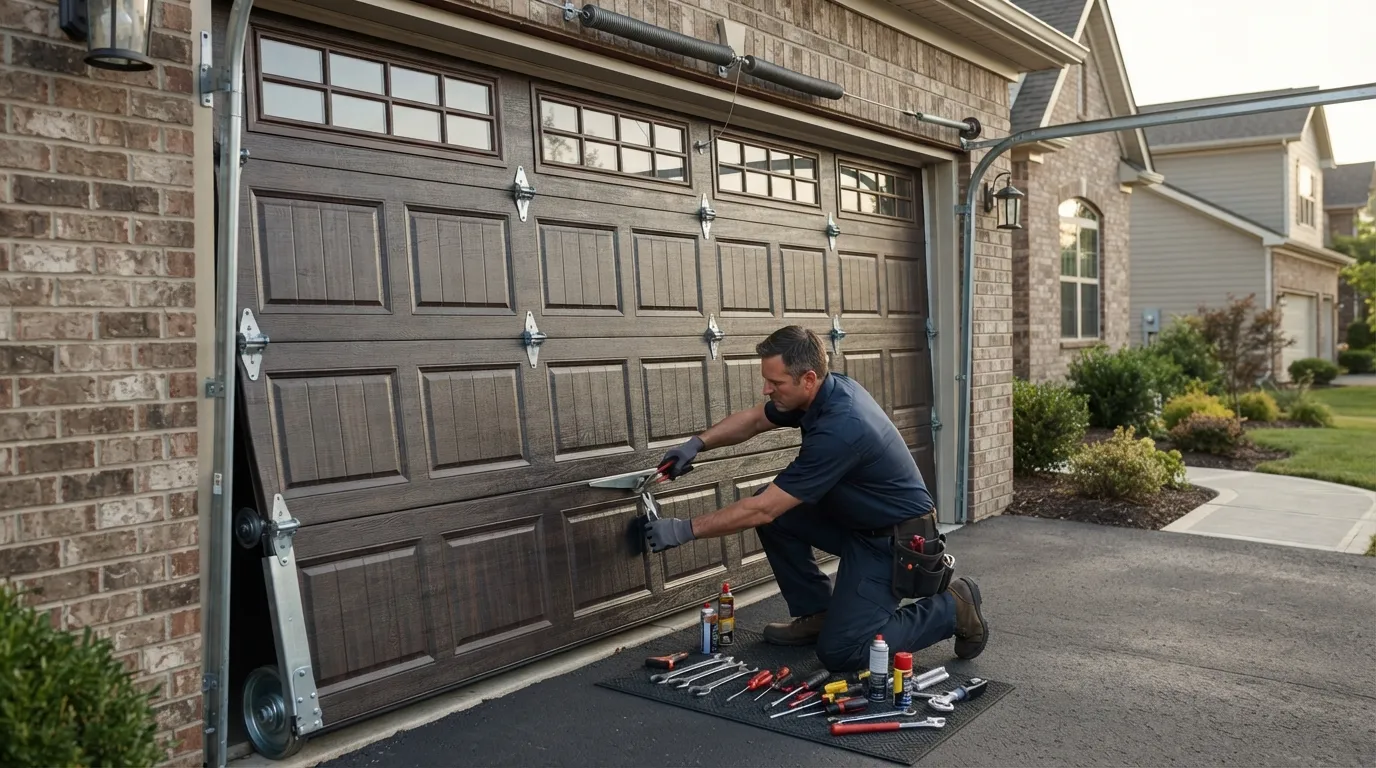
Housing across this service area was mostly built between 1962 and 2005, with the median home dating to 1983, and the bulk of the stock across the 43 named communities we cover falling in the 1980s and 90s. That era is exactly when steel sectional doors became standard, replacing the older wood swing-up and one-piece styles. Those steel doors are now 30 to 40 years old, and steel that age has usually gone through a few paint failures and a few rust cycles at the bottom panel, where splash-back and standing water do the most damage.
The climate band here is cold-moderate, which matters more than people think. It's not the deep-freeze damage you'd get further inland, but repeated freeze-thaw swings work on the rivets and seam joints in a steel panel over decades, loosening the fold where two panel skins meet. Add in the moisture that sits at grade level through a wet winter, and the bottom one or two panels on a door take far more wear than the top sections ever will.
Across the households we serve - 228,944 total, with 118,902 of those owner-occupied houses - most garages sit at ground level with a slab that slopes toward the door, so water pools right where the panel meets the floor. That's the single biggest driver of panel failure we see, more than any storm or impact.