
Winter strain accumulation
Left alone through a few winters, that extra drag on cold mornings is what eventually strains an opener's gears or snaps a spring that was already near the end of its cycle count.
Covington, Kent
Garage door repair for Covington, WA, five miles from our Kent shop. 1990s-era steel doors, cold-climate wear, and what a call here actually looks like.
Booking
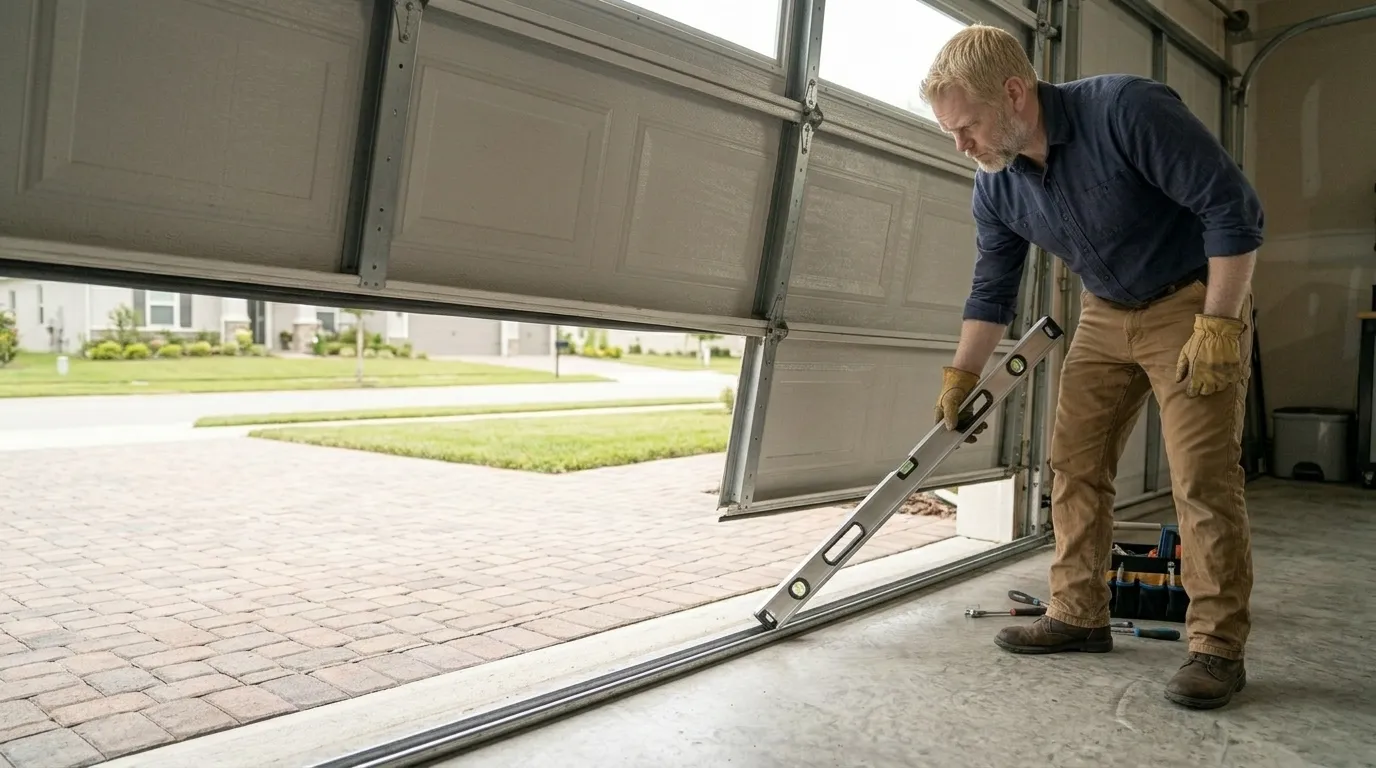
Covington sits five miles from Kent, which is a short enough run that the drive itself isn't the thing that decides whether your call gets handled today or pushed out. There's no branch office in Covington - every truck comes from the Kent shop - but five miles is a quick trip compared to the towns further out on our [service list](/covington-garage-doors/), so a broken spring or a dead opener here doesn't sit on the schedule the way a job in one of the farther suburbs might.
What actually slows a call down isn't distance, it's parts. If your door is a common size and the spring or roller on it is a stock item, the job runs like any other. If it's an odd panel width or a builder-grade opener that isn't sold anymore, that part may need ordering before the job can close out. Tell us the door's rough age and, if you can find it, the model plate on the opener when you call - it saves a second trip. For the rest of what the Kent shop covers day to day, see [garage door repair in Kent](/garage-door-repair-kent-wa).
The repair
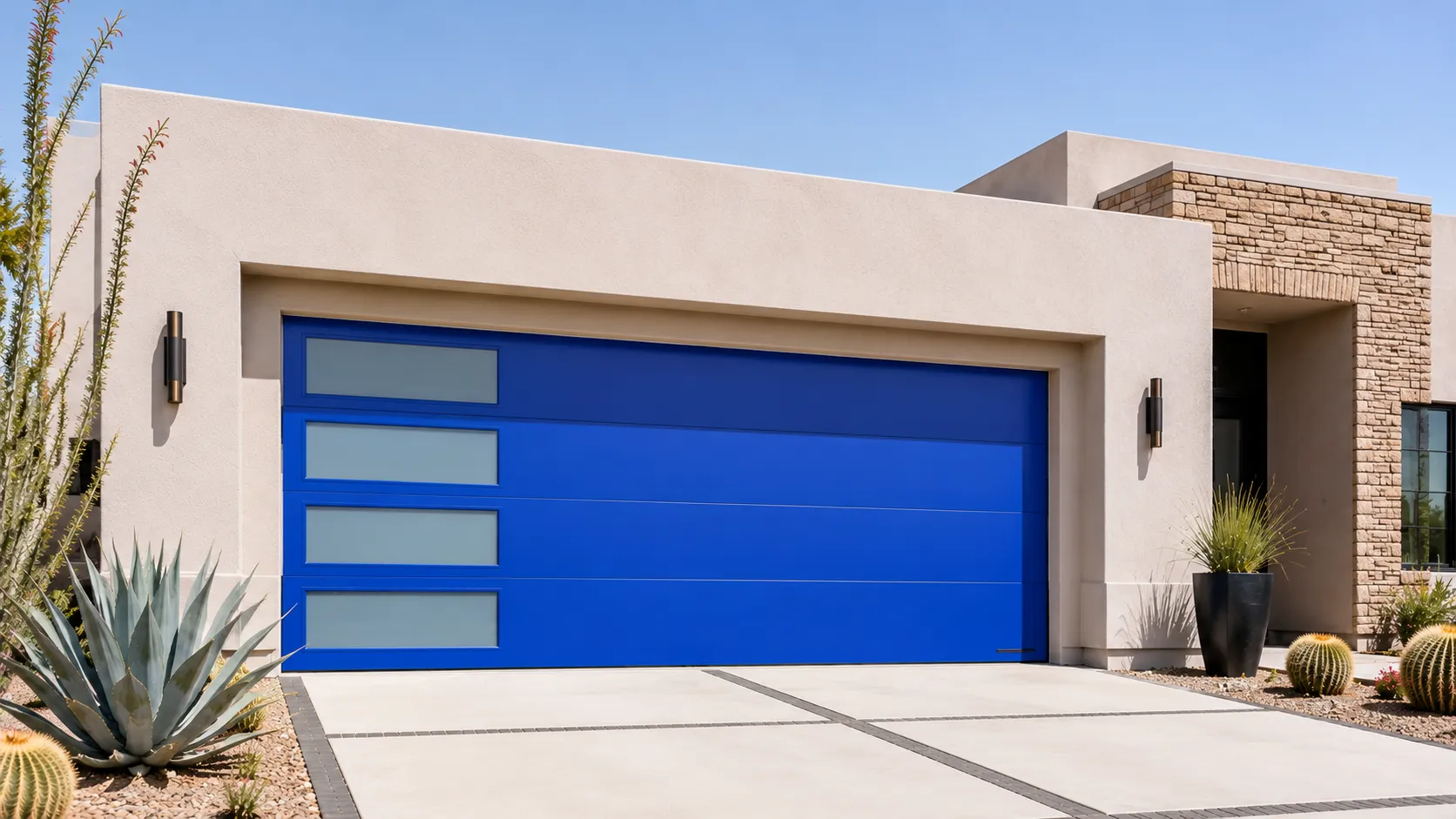
The median house in Covington was built around 1994, which puts most of the town's garage doors and openers a decade or more newer than the 1983 median across the wider Kent service area, where stock runs anywhere from 1962 to 2005.
That difference shows up on the job. A 1994-era door is almost always a steel sectional panel on a torsion spring set sized for that panel weight, paired with a chain or belt-drive opener from that same production window - not the older side-mounted torsion hardware you'll find on houses built before the early 1980s.
What that means for a repair: the spring, cable, and roller sizes on a typical Covington door are common ones, still stocked, not the harder-to-source parts that turn up on the oldest houses in the service area.
The fix itself is usually straightforward - pull the broken spring, match the wire gauge and wind, reinstall and balance the door - but on any door regardless of age, we check the cable condition and the opener's force settings at the same time, since a spring rarely fails on its own without pulling something else out of tune.
Warning signs
This area sits in a cold-moderate climate band, and that shows up less in dramatic breakdowns and more in slow wear. Cold mornings stiffen the lubricant in rollers and hinges, so a door that runs quiet in July can groan or hesitate on a January morning - that's the metal contracting and the grease thickening, not necessarily a part failing outright.
Left alone through a few winters, that extra drag on cold mornings is what eventually strains an opener's gears or snaps a spring that was already near the end of its cycle count.
The usual signs: the door hesitates or jerks partway up, the opener motor runs longer than it used to before the door moves, or you hear a scrape from a roller that's lost its grease.
None of those mean the door is done - they mean something's due for lubrication, adjustment, or a single part swap. The signs worth calling about right away are a door that won't stay open on its own, a cable that looks frayed, or a loud bang, which usually means a spring has already gone.

DIY or pro
Some of this is fair to handle yourself. Wiping down and lubricating the rollers and hinges once or twice a year, checking that the track is clear of debris, and testing the auto-reverse safety feature by setting a piece of wood in the door's path are all reasonable homeowner jobs, and they head off a good share of the cold-morning stiffness this area sees.
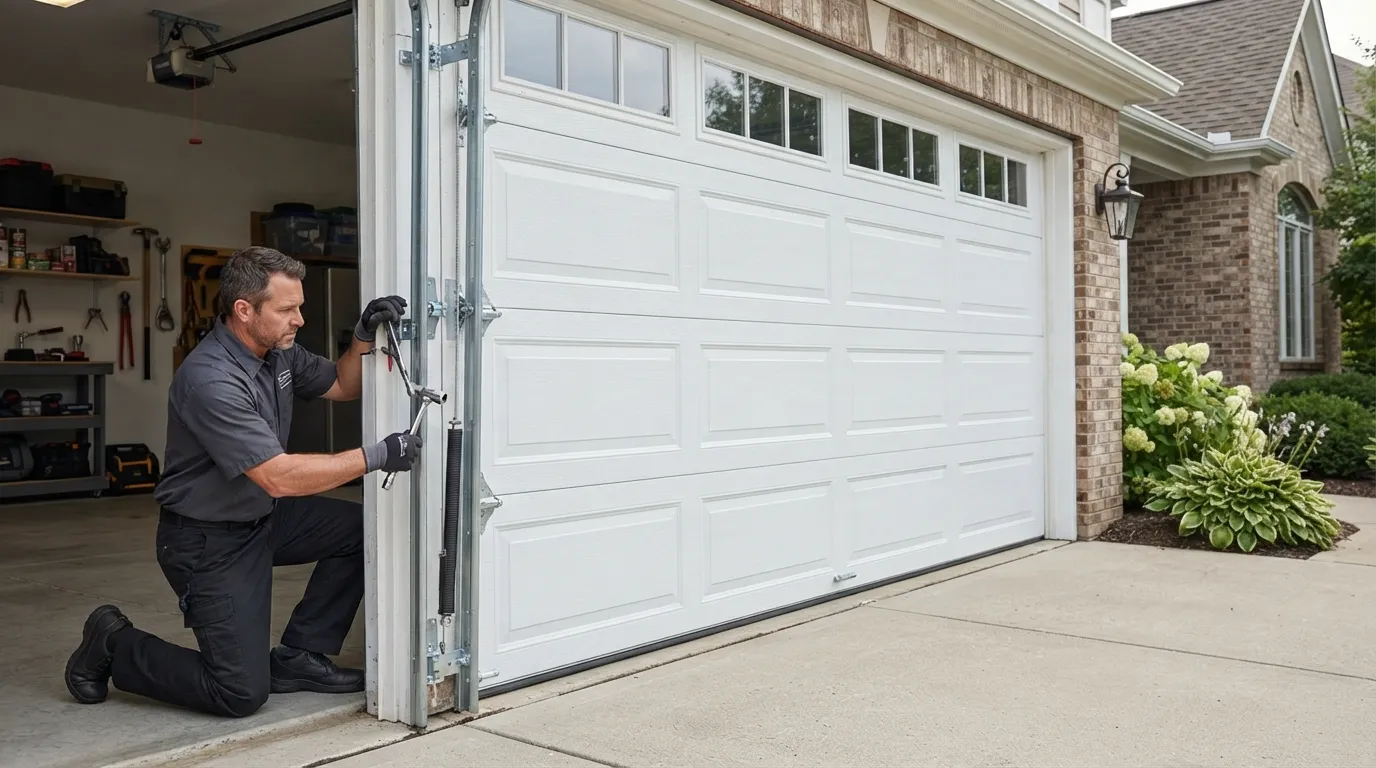
What isn't a DIY job is anything involving the torsion or extension springs, or the cables under tension. Those parts store enough force to cause a serious injury if they let go while you're working near them, and that's true whether the door is five years old or twenty-five. If a spring has already broken, the door is likely too heavy to lift safely by hand - don't try to force it up on the opener, since that's a fast way to burn out the motor or bend the track. That one's worth the call every time.
Downtime
For a straightforward job - a broken spring, a bad roller, a sensor knocked out of alignment - the door is usually back in service the same day the part is on the truck, since those are the components that fail most often on the 1990s-era doors common here.
Where it stretches out is when the part isn't a stock item: an odd-width panel, a discontinued opener logic board, or hardware for a heavier insulated door than the original builder installed.
If a full section is cracked or an opener's circuit board is fried rather than just a switch or sensor, replacement is often the more honest answer than a repair that patches one part while the rest of the door is on the same clock.
We'll tell you straight if that's where your door is at rather than billing for a fix that buys you a year. In the meantime, a door stuck open or unable to close isn't safe to leave - block the opening or get the door manually latched down until the part or crew arrives.
Questions
About five miles. There's no separate branch in Covington - the truck comes from the Kent shop - but that distance is short enough that it isn't the deciding factor in scheduling. Parts availability for your specific door matters more than the drive.
Mostly, yes. Covington's median house was built around 1994, a decade or more newer than the 1983 median across the wider service area. That means steel sectional doors with torsion springs sized for that era, not the older side-mounted hardware found on pre-1980s houses.
Cold thickens grease and stiffens metal, so rollers and hinges drag more on cold mornings. It's usually wear showing up faster, not a new problem. Regular lubrication cuts down on it, but a door already near the end of a spring's life cycle can fail sooner in cold weather.
No. Torsion and extension springs hold enough stored force to cause serious injury if they release while you're working near them. This applies regardless of the door's age or size. Lubrication and track cleaning are fine DIY tasks; springs and cables under tension are not.
Explore more
Ready when you are
Kent Garage Door Co repairs and installs garage doors, springs and openers in Kent, WA and the surrounding area.