
Predictable roller failure
The failure mode is predictable: a roller cracks, the stem binds in the track, and the door starts jumping or grinding on one side before it locks up entirely.
Bonney Lake, Kent
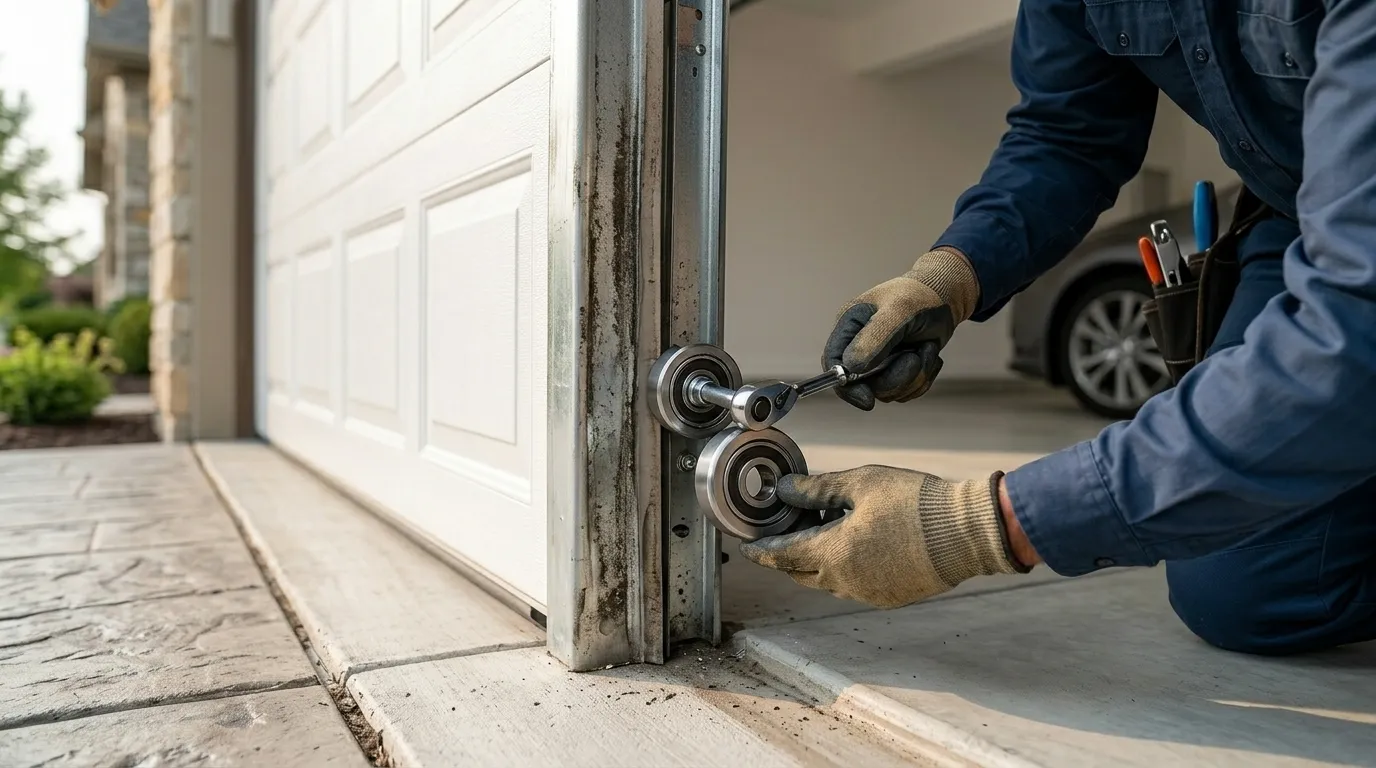
Bonney Lake homes built mostly after 2001 came with stock nylon rollers now pushing 20+ years old. We replace worn rollers on a trip out from Kent.
Booking
We work Bonney Lake from our Kent shop, about 13 miles out, so a roller job here gets scheduled as a stop on the route rather than a same-hour drop-in.
That's fine for roller work - it's not an emergency repair like a snapped spring locking the door shut. Tell us the door's age and whether it's grinding, jumping the track, or just loud, and we bring the right roller stock instead of guessing on site.
Most of what we see out here traces back to the original build. Bonney Lake's housing stock centers on 2001, newer than a lot of the service area, which means the doors are still on their first or second set of hardware.
That's useful information before we even show up, because it tells us whether we're dealing with factory-grade rollers on their way out or a prior repair that used mismatched parts. If you know the door was replaced or serviced before, mention it - it changes what's on the truck for that stop.
Pricing
I don't have a set price to quote here - costs depend on roller count, whether it's a full 10-roller set or a partial swap, and whether the track needs adjustment at the same time. What I can tell you is the pattern: full-set nylon roller replacement is a smaller job than track or spring work, and it's worth doing as a set rather than one at a time, since a door built around 2001 is old enough now that the rest of the rollers are close behind whichever one failed first.
If a technician gets on site and finds the track bent or the hardware rusted past a simple swap, that gets priced separately before any work starts - no roller replacement fixes a bent track, and we won't sell you one that pretends to.
Watch-outs
A house built in 2001 typically came with stamped-steel rollers wrapped in nylon, not the sealed ball-bearing kind. Nylon holds up fine for years, but it hardens and cracks with age and with cold - and this area sits in a cold-moderate climate band, which means winter stiffening on top of two decades of cycles.
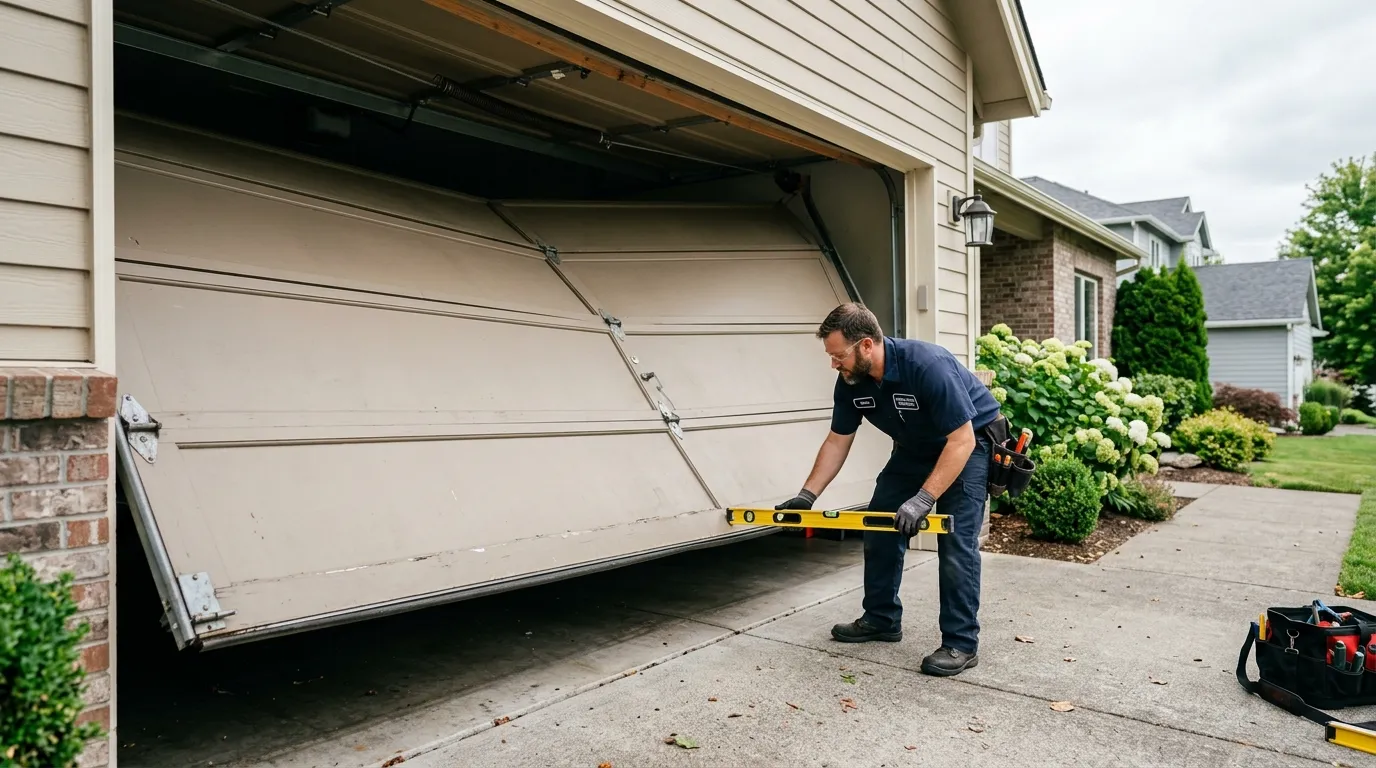
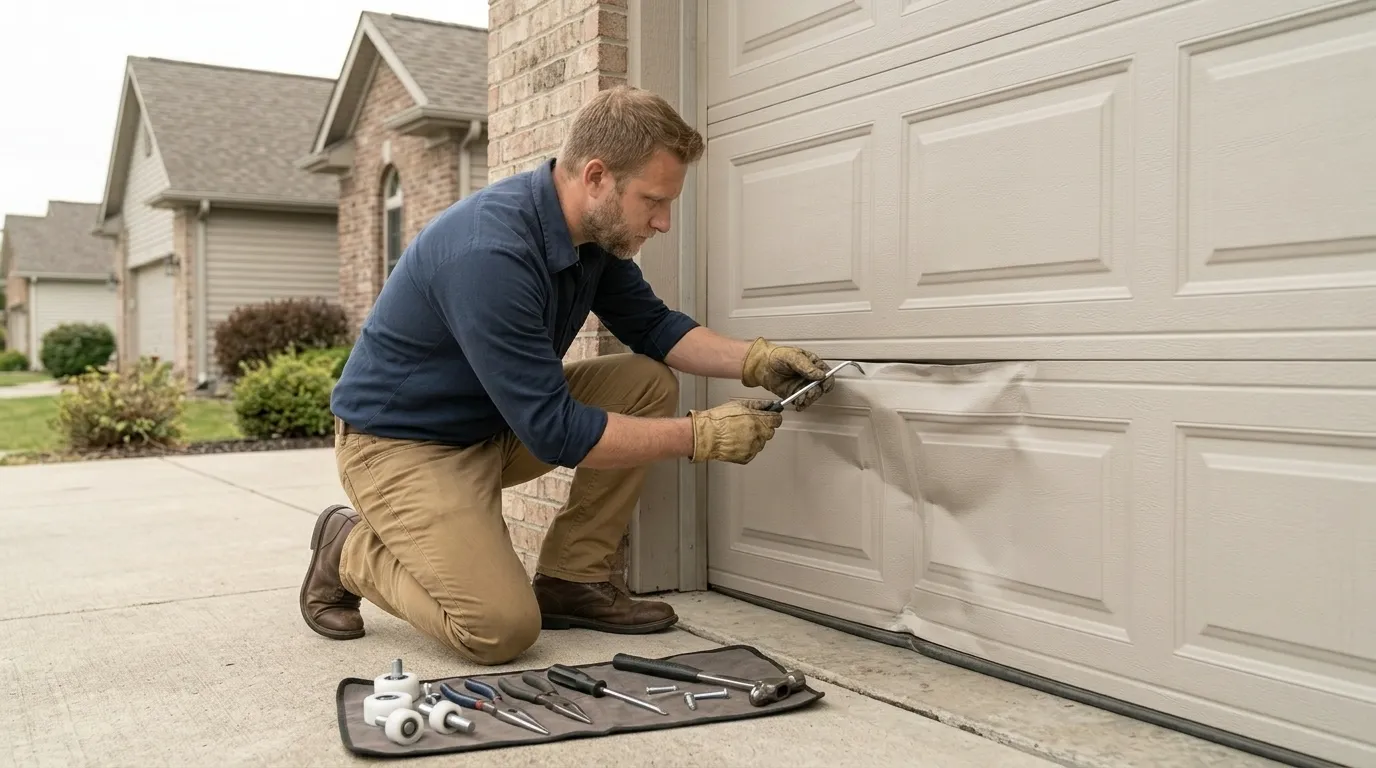
The failure mode is predictable: a roller cracks, the stem binds in the track, and the door starts jumping or grinding on one side before it locks up entirely.
The other issue we see on doors from this era is a roller stem that's worn oval instead of round, from running dry for years with no lubrication.
That wear transfers stress to the hinge and eventually the track flange, so what started as a $20 roller problem becomes a track alignment problem if it sits too long. On a door this age, we'd rather replace the full roller set once than come back twice.

On the truck
For a Bonney Lake stop we carry both nylon and sealed-bearing steel rollers, since which one makes sense depends on how the door's actually used, not just its age. A door built in 2001 with the original 4-inch stem nylon rollers is a common swap; sealed-bearing steel rollers cost more up front but run quieter and outlast nylon by years, which matters if the original set is already cracking at 20+ years old.
We also bring stem lengths in both 4-inch and 7-inch, since garages here vary in track depth, and general hardware - hinges, roller brackets, lubricant - because a roller job often turns up a bent hinge or a stripped bracket screw once the old roller comes out. What we don't carry is replacement track sections; if the track itself is bent, that's a separate estimate, not a roller swap.

DIY or pro
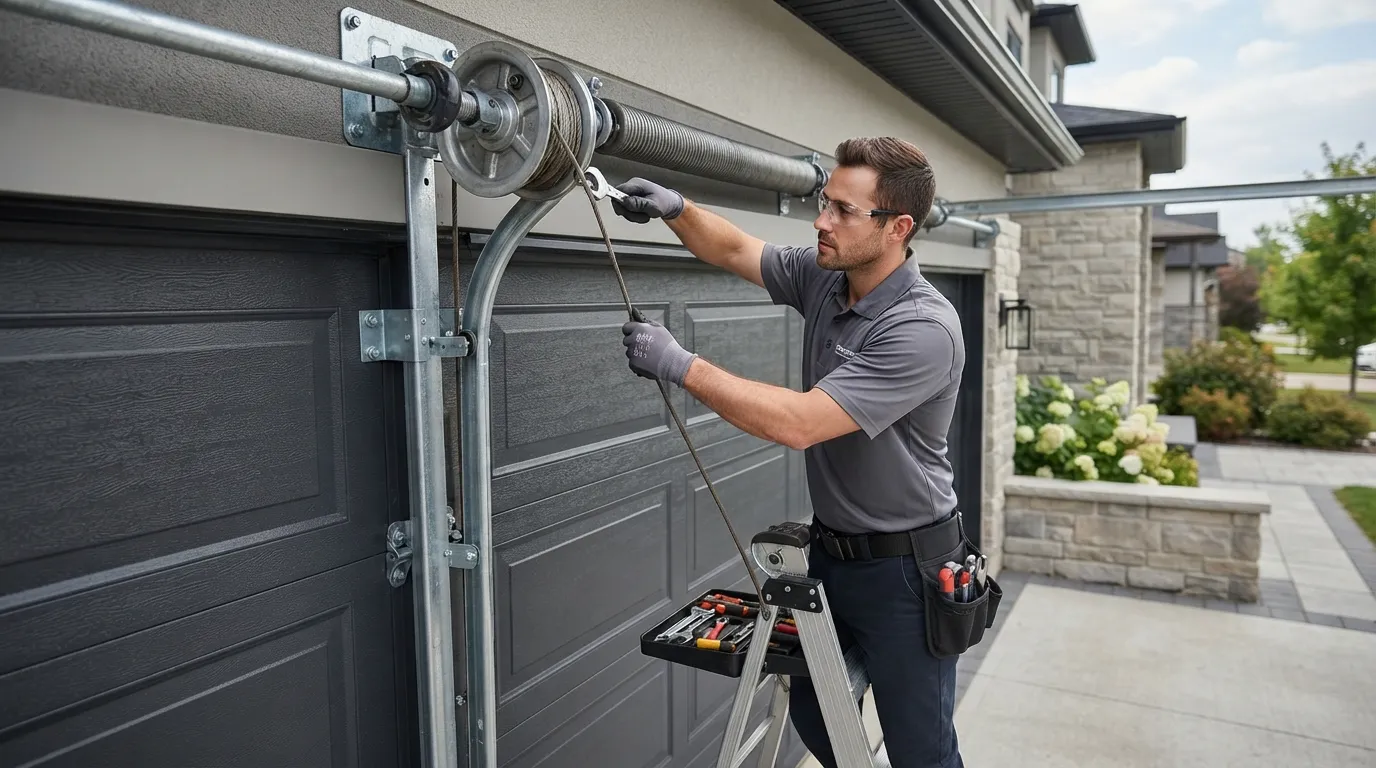
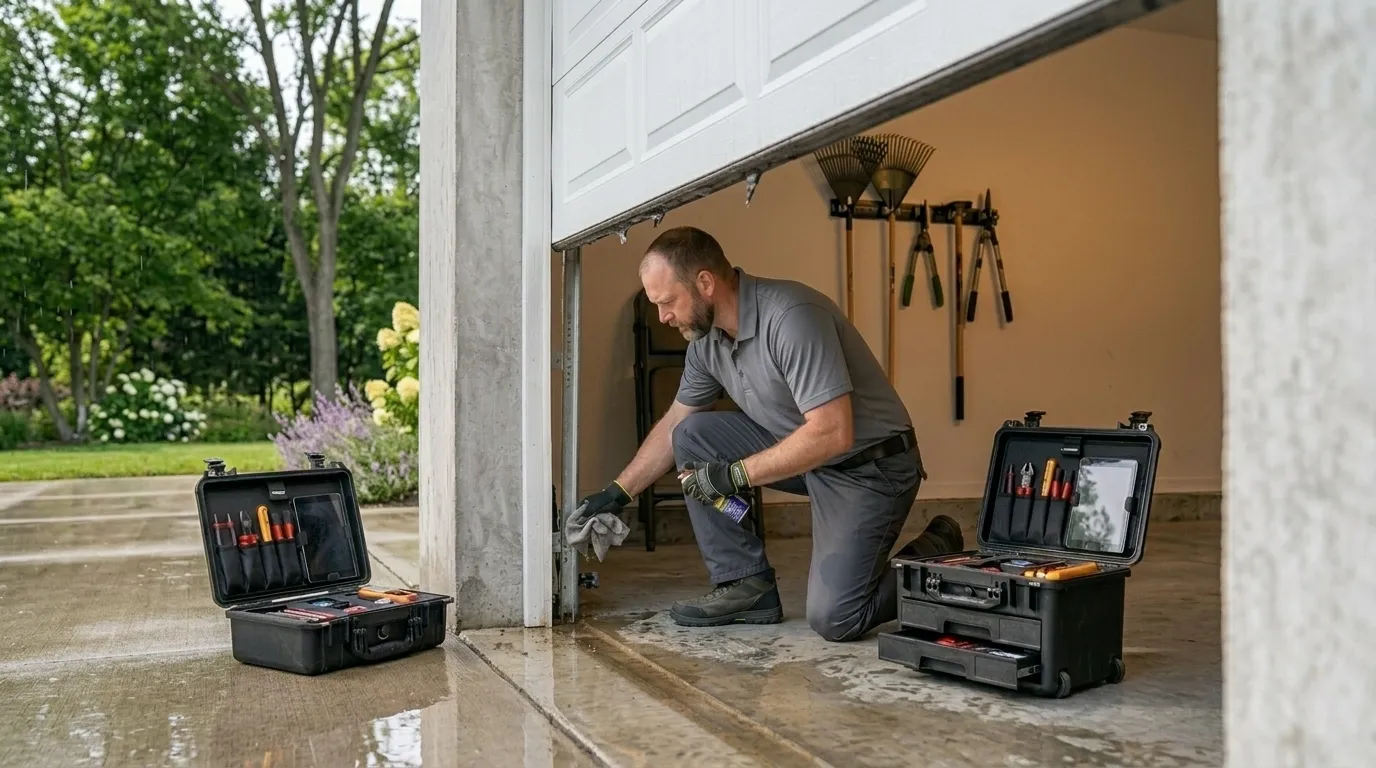
Swapping a bottom-corner roller is within reach for a careful homeowner - remove the bracket bolt, slide the roller out, slide the new one in. The rollers higher up the track, near the horizontal section and the spring assembly, are a different story. Pulling those means the door is unsupported on that side for a moment, and on an extension-spring door that's still common on 2001-era construction, that's enough to drop a panel or catch a hand.
If you're set on doing it yourself, do the bottom rollers only, keep the door propped, and stop if anything binds. A full-set swap on a door this age is worth having done in one visit - it's the kind of job where doing all ten at once costs a lot less than doing two now and eight later after a lockup.
Questions
Original nylon rollers typically last 10-15 years of daily cycles before the plastic hardens and cracks, especially with cold-climate stiffening in winter. A house built in 2001 is now old enough that the original set is past due, even though the door and opener may look fine otherwise.
Both. We bring nylon rollers for a like-for-like swap and sealed-bearing steel rollers for anyone upgrading to quieter, longer-lasting hardware. Which one makes sense depends on the door's use and how the old rollers wore, so we decide on site rather than pre-loading one type.
About 13 miles. We travel out from our Kent shop for this work; there's no local branch in Bonney Lake, so roller replacement here gets scheduled rather than handled as an immediate same-hour call.
You can, but on a door built around 2001 the rest of the rollers are the same age and made of the same nylon, so they're close behind. A partial swap fixes the noise now but often means a second call within a year or two for the next roller to go.
Explore more
Ready when you are
Kent Garage Door Co repairs and installs garage doors, springs and openers in Kent, WA and the surrounding area.